When Repairing Beats Replacing
Origin and history
The decision-making framework known as "When Repairing Beats Replacing" originated in consumer advocacy and practical engineering communities in North America and Western Europe during the late 20th century. Its development was a direct response to the rise of manufactured obsolescence and increasingly disposable consumer goods. The concept gained formal structure as energy efficiency standards and lifecycle analysis became more prevalent in appliance evaluation. It was widely documented and disseminated through cooperative extension services, consumer protection agencies, and technical manuals by the 1990s. This framework evolved from a simple cost comparison into a more holistic analysis incorporating operational and environmental factors. Its historical roots are tied to the broader repair movement, which emphasizes skill retention and resource conservation over pure consumption.
What it is designed for
This framework is designed for owners of major household appliances and systems to make economically and environmentally rational decisions regarding their maintenance. Its primary function is to provide a structured comparison between the costs and benefits of repairing an existing unit versus purchasing a new replacement. It is specifically intended for durable goods like refrigerators, washing machines, furnaces, and air conditioners. The analysis forces consideration of not only the immediate repair bill but also the ongoing costs of operating an older, potentially less efficient unit. It is engineered to factor in the expected remaining lifespan of a repaired appliance against the warranty and projected lifespan of a new one. Ultimately, it aims to prevent wasteful expenditure on repairs for terminally declining units and to identify when new investment in efficiency yields long-term savings.
Development and versions
The initial version of this decision framework was a simple calculation comparing a repair cost to the purchase price of a new appliance. Early development in the 1970s and 1980s incorporated basic estimates of annual operating costs, using rudimentary energy consumption figures. A more sophisticated version emerged in the 1990s, integrating standardized Energy Guide labels and estimated annual energy costs provided by manufacturers. The modern iteration heavily utilizes the concept of "payback period," calculating how long the energy savings of a new, efficient model will take to offset its purchase price after accounting for repair costs. Current versions also consider local utility rebates for high-efficiency appliances and regional electricity or fuel costs, which significantly impact the calculation. The framework continues to evolve with the inclusion of embedded carbon estimates and the availability of refurbished appliances as a third option between repair and new purchase.
Pros and cons
A primary advantage of applying this framework is the prevention of emotional decision-making, such as repeatedly repairing a nostalgic but inefficient appliance that is economically draining. A significant pro is the potential for substantial long-term savings by replacing an energy-hogging unit with a modern one, where the payback period is short. Conversely, a major con is the framework's reliance on accurate estimates for repair costs, remaining lifespan, and local energy costs, which can be difficult for consumers to obtain. Users often regret choosing repair when a supposedly fixed appliance suffers a cascading failure of other aged components shortly after the initial service call, effectively paying twice. The most common mistake is failing to account for the full cost of a new appliance, including delivery, installation, disposal fees, and any necessary modifications to existing hookups, which skews the comparison. Another frequent error is overestimating the remaining efficiency of an older unit or underestimating the efficiency gains of newer models, as efficiency standards have improved markedly in recent decades.
Who it suits
This analytical framework suits methodical homeowners who maintain records of appliance maintenance and have a moderate to long-term outlook on their housing situation. It is particularly valuable for owners of appliances that are 8-15 years old, a typical window where major components fail but the unit is not necessarily ancient. It suits individuals in regions with high or volatile energy costs, where the operating cost variable in the equation carries substantial financial weight. The framework is less suited to those who may move residence in the very near future, as they are unlikely to realize the long-term energy savings from a new appliance. It is also poorly matched for appliances that are far beyond their typical lifespan or for which replacement parts are prohibitively expensive or no longer available, making the repair option clearly non-viable. Finally, it is essential for environmentally conscious consumers seeking to minimize waste and carbon footprint, as it provides a structured way to evaluate the full lifecycle impact of their decision.
Latest When Repairing Beats Replacing news
Latest reporting

OpenAI chip beats Nvidia in efficiency
OpenAI has revealed performance benchmarks for its custom Jalapeño AI chip, claiming it delivers up to 1.9x better throughput per kilowatt than...
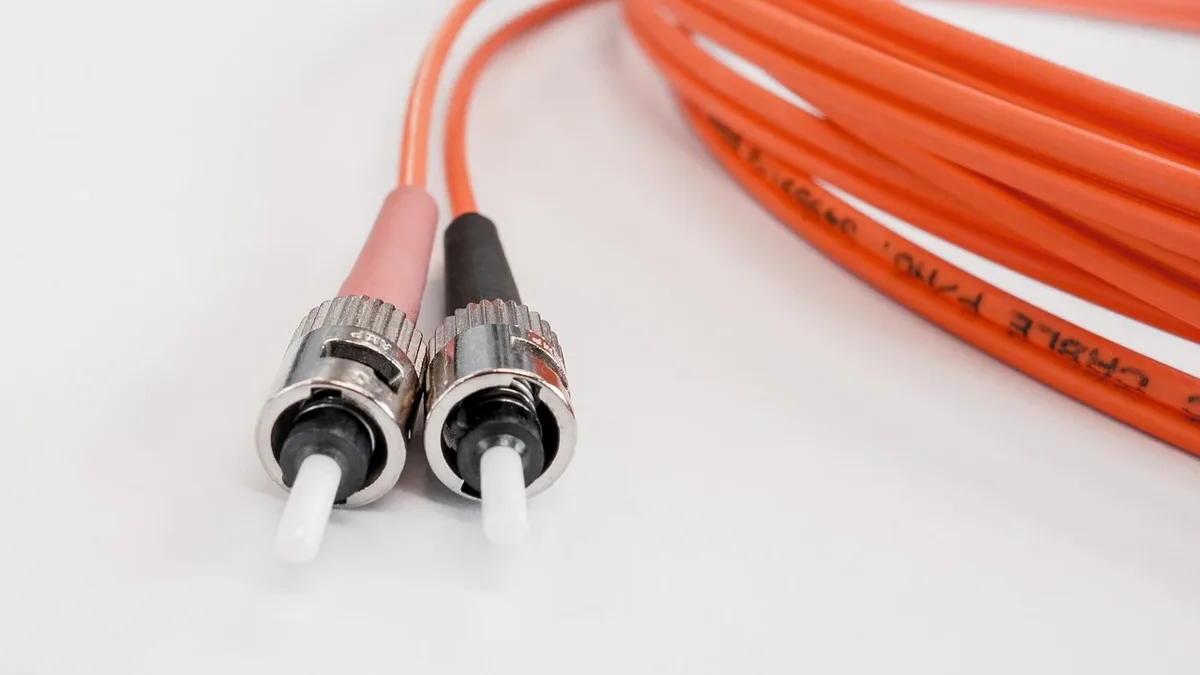
AT&T sues Charter over fiber marketing
AT&T sued Charter, claiming its Spectrum internet marketing misleads by calling service 'fiber-powered' when most connections use copper cables to...

Robot Pool Cleaner Tests: Efficiency Beats
Lab tests show a robotic pool cleaner's cleaning efficiency, often boosted by AI navigation, is more important than its raw suction power for...