Plug-In Solar Panels: What They Can and Cannot Power
Experts detail which household appliances can be run on plug-in solar panel output and which energy-hungry devices remain beyond their capacity.
A typical plug-in solar panel generates between 100 and 400 watts. On a clear UK summer day, a 400-watt panel may produce 250 to 320 watt-hours of electricity, according to John Collett, Director of Quantum Renewables.
These portable panels are more affordable and easier to install than traditional rooftop systems. Their output fluctuates with sunlight, shading, and the time of year. Hemal Morjaria, Chief Commercial Officer at City Plumbing, notes the kits do not store energy. Any electricity produced must be used immediately or it flows back to the grid.
Appliances You Can Power
Strategically used during daylight hours, a plug-in solar panel can offset specific appliances. John Collett states a 400-watt panel generating 300 watt-hours on a good day could run several common devices.
| Appliance | Estimated Runtime or Use |
|---|---|
| LED TV | Around 4 to 5 hours |
| Laptop | Can be charged 3 or 4 times |
| Energy-efficient fridge | Approximately 3 hours |
| Phone charger | Essentially all day |
| Wi-Fi router | Can be powered |
| Games console (e.g., Xbox S) | Can be powered |
Morjaria frames this as reducing the amount of electricity a home draws from the grid. It is not enough to make a major dent in total household consumption.
Appliances You Cannot Power
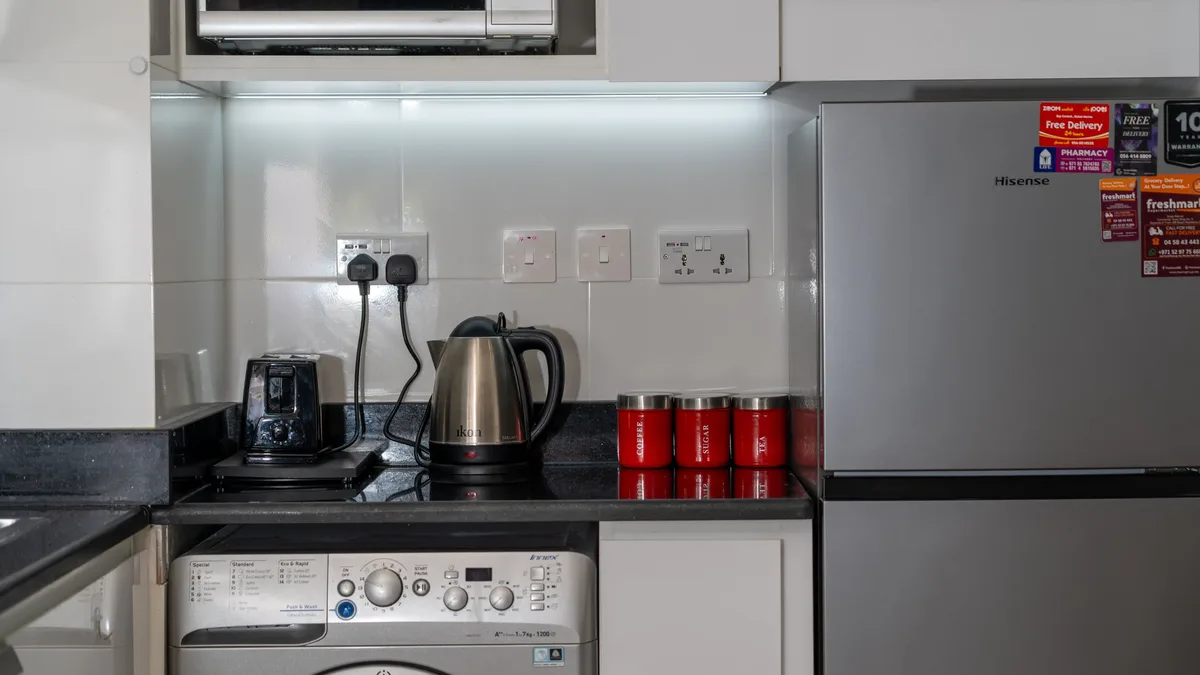
Heavy, heat-generating appliances typically exceed the output of a plug-in solar panel. Devices often used after sunset also fall outside their operational window.
Brian Davenport, a solar lighting expert and Co-Founder of The Solar Centre, explains the limitation. The output typically will not be enough to run high-demand appliances simultaneously with others. The list includes tumble dryers, washing machines, electric showers, EV chargers, and ovens.
Optimising Panel Output
Homeowners can take steps to maximise the power their plug-in solar panel generates. Correct placement and maintenance are crucial.
Alvaro Iturmendi, a solar energy expert at Uswitch, advises choosing the correct placement and being aware of daytime energy use. John Collett recommends a south-facing installation at an angle between 30 and 40 degrees for the best year-round output in the UK.
He warns to avoid any shading from trees or buildings. Even partial shading significantly reduces output. Keeping the panel surface clean from dust and debris is also important for maintaining efficiency.
The source report, from Ideal Home, quotes multiple experts on the practical limits of this technology for home appliance use.