Robot Pool Cleaner Tests: Efficiency Beats
Lab tests show a robotic pool cleaner's cleaning efficiency, often boosted by AI navigation, is more important than its raw suction power for effective cleaning.
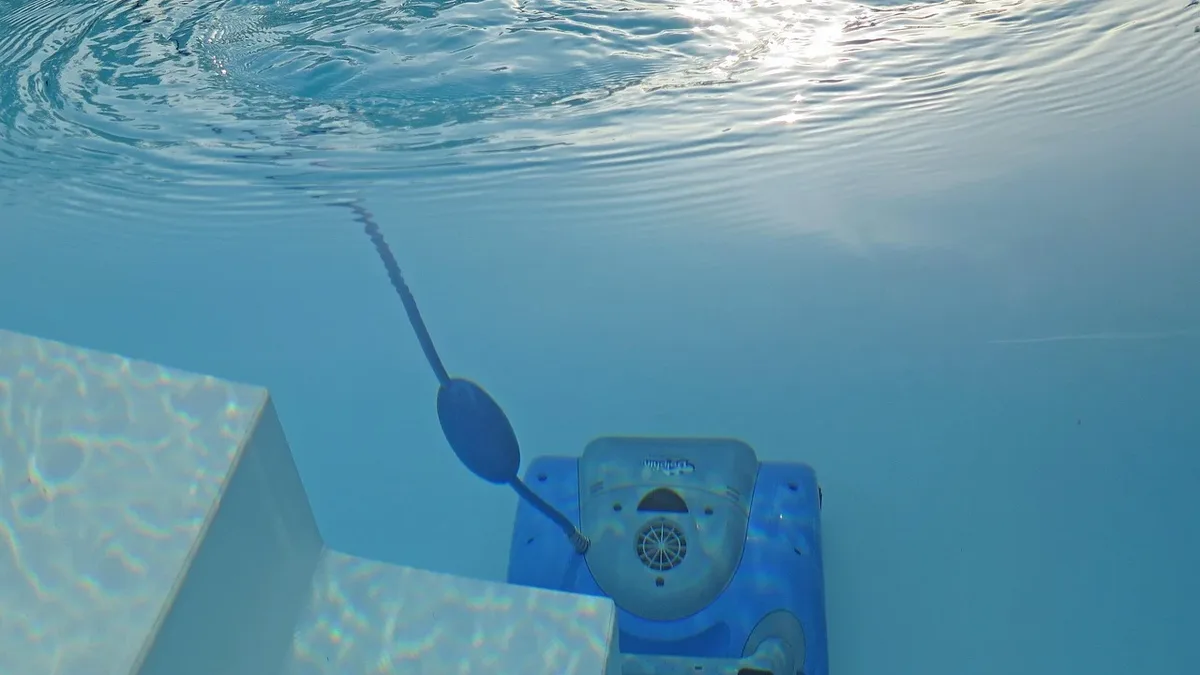
CNET's lab tests indicate that a robotic pool cleaner's cleaning efficiency is a more critical metric than its raw suction power. The findings challenge the traditional focus on gallons-per-hour (GPH) ratings when shopping for these appliances.
Historically, suction power and battery life were the key metrics for robot pool cleaners. According to the source, newer models integrate smart navigation, cameras, and sensors, often called AI, which have shifted the balance. These intelligent features can allow a machine to clean effectively without needing an oversized battery or extremely high suction. For the latest product reviews and test results, see our detailed stats page.
Efficiency Over Raw Power
Suction rates for residential robot cleaners range from about 4,000 to 8,000 gallons per hour. The tests found that most top cleaners have enough suction to handle common debris like leaves, twigs, and small pebbles. The source notes that models with 8,500 GPH suction achieved success rates similar to models with half that power when clearing test debris.
This observation led to the development of a new testing methodology focused on holistic efficiency rather than power alone.
How The Lab Tests Worked
To measure efficiency, each robot was run on a full charge in a 14,000-gallon test pool. The pool bottom was scattered with 100 pebbles and 30 leaves, more debris than a typical pool would have. The robots were given time to map the pool if they had the capability.
The testers timed how long each robot operated and then counted the debris captured in its basket. An efficiency score was calculated, indicating how many pieces of debris a cleaner collects per hour. This rigorous testing process is part of our commitment to providing reliable fixtures for product evaluation.
Top Performing Cordless Models
Several cordless models performed well, but three stood out for total pickup, leaving fewer than five total objects. The most efficient cordless robot was the Aiper Scuba V3 with AI detection, which earned a CNET Lab Award.
| Model | Debris Left (Pebbles/Leaves) | Cleaning Time | Efficiency Score (Items/Hour) |
|---|---|---|---|
| Aiper Scuba V3 | 5 pebbles, 0 leaves | 2 hours 48 minutes | 44.64 |
| Aiper Scuba X1 Pro Max | 0 pebbles, 0 leaves | Over 4 hours | 28.36 |
| Beatbot Aquasense Pro | 3 pebbles, 0 leaves | 4 hours 40 minutes | 27.21 |
| Polaris Freedom | 13 pebbles, 10 leaves | 2 hours 25 minutes | 44.28 |
The Aiper Scuba V3 cleared 125 of 130 debris pieces. The source states its dominant efficiency was due to "its ability to detect debris with cameras, sensors, and AI for targeted cleaning." It was observed stopping and turning toward debris, unlike models that roam aimlessly.
The robot that cleared the most total debris was the Aiper Scuba X1 Pro Max, leaving nothing behind, but it took over four hours. The Beatbot Aquasense Pro also cleared all leaves and left only three stones, but required nearly five hours.
The Impact of AI and Design
Among the cordless test group, three robots picked up all 30 leaves and at least 95 pebbles. The Aiper Scuba V3 achieved its high efficiency rating despite having "significantly lower GPH and battery life" than its competitors.
The source reports that the most expensive robot cleaners typically have the largest motors and batteries, making them the heaviest. The two models that beat the Scuba V3 in overall performance weigh 7 and 16 pounds more. They are also more expensive, retailing for $1,800 and $2,199, while the Aiper Scuba V3 costs around $850.
Corded Models Offer Consistent Power
Corded robotic pool cleaners are generally more efficient than cordless models because they have a consistent power supply and can run back-to-back cycles. However, you cannot swim while they operate due to shock risk, and they require a nearby outlet.
The corded Dolphin Nautilus CC Plus was the most efficient model tested overall, earning a CNET Lab Award. Of the three corded models tested, it performed the best.
| Model | Debris Left (Pebbles/Leaves) | Run Time | Efficiency Score (Items/Hour) |
|---|---|---|---|
| Dolphin Nautilus CC Plus | 14 pebbles, 0 leaves | 2 hours | 58 |
| Polaris ERA | Not specified | 2 hours 30 minutes | 45 |
| Dolphin E10 | Not specified | 2 hours | 54 |
The Dolphin Nautilus CC Plus cleared all leaves and all but 14 pebbles during its two-hour runtime. Its efficiency score of 58 items per hour was better than the Polaris ERA's score of 45. The Dolphin E10 picked up 108 of 130 items for an efficiency score of 54. For comparisons across different product categories, check our comprehensive standings.