
How Much Storage You Need
| Storage type | Physical storage unit (e.g., shed, container) |
|---|---|
| Original use | Secure storage of personal or commercial goods |
| Typical capacity range | Small (5x5 ft) to large (10x30 ft or more) |
| Common construction materials | Steel, wood, aluminum |
| Standard security features | Lockable door, often with padlock hasp |
| Climate control | Typically not standard; available as an option |
| Access type | Drive-up or interior hallway |
Origin and history
The concept of "How Much Storage You Need" for residential energy systems emerged as a consumer-focused planning tool in North America in the early 21st century. Its development was driven by the increasing adoption of residential solar photovoltaic systems and the subsequent consumer question of whether to add battery storage. The framework gained significant traction during the 2010s alongside the commercialization and falling costs of lithium-ion home battery products. It was not invented by a single entity but evolved through industry white papers, utility program guidelines, and installer educational materials. The core methodology was established as a direct response to frequent consumer confusion over the sizing and value proposition of battery storage. This planning principle has since become a standard part of the pre-purchase consultation process for solar and storage installers globally.
What it is designed for
The "How Much Storage You Need" framework is designed to help homeowners determine the appropriate capacity, measured in kilowatt-hours (kWh), for a battery energy storage system. Its primary purpose is to align the physical battery size with the specific financial and operational goals of the household. The process is fundamentally intended to bridge the gap between a salesperson's generic recommendations and the occupant's actual electricity consumption patterns and outage concerns. It serves as a critical tool for evaluating whether the primary use case is for daily self-consumption of solar energy or for providing backup power during grid outages. The methodology explicitly aims to prevent the common error of purchasing an over-sized, unnecessarily expensive system or an under-sized, ineffective one. By focusing on load analysis and goal definition, it seeks to translate abstract storage concepts into a tangible and financially sound purchase decision.
Development and versions
The initial development of the "How Much Storage You Need" methodology was a simple comparison of average daily solar overproduction to a basic battery capacity rating. Early versions often relied on rule-of-thumb estimates, such as recommending storage equal to one full day of home energy use, which frequently led to inaccurate sizing. The framework evolved significantly with the integration of detailed energy audit practices, utilizing data from smart meters and historical utility bills to create a more precise load profile. A major development was the formal incorporation of distinct "use cases," separating calculations for daily energy shifting from those for backup power during outages, which require different depth-of-discharge and power ratings. Modern versions of the methodology now heavily emphasize software-based modeling that simulates system performance across different seasons and weather scenarios. The latest iterations also integrate grid tariff structures, such as time-of-use rates, and specific appliance startup surges to refine the recommended storage and inverter size.
Pros and cons
A primary pro of diligently applying this framework is the high potential for cost savings by avoiding the purchase of excess battery capacity that would seldom be used. It forces a realistic assessment of which circuits are truly essential during an outage, often revealing that a smaller, more affordable system suffices. A significant con is that the methodology relies heavily on accurate, historical consumption data, which new homeowners or those with poorly metered homes may lack, leading to estimations that compromise accuracy. A common mistake is underestimating the energy needed for multi-day outage resilience, particularly in regions prone to prolonged grid failures following storms, resulting in a system that depletes too quickly. Many who regret their purchase chose a system sized only for daily financial arbitrage without considering future backup needs, leaving them vulnerable during power cuts. Conversely, others regret an expensive oversized system after realizing their outage frequency does not justify the large capital expenditure, as the financial payback period becomes excessively long.
Who it suits
This analytical framework suits technically-inclined homeowners or those willing to engage deeply with their energy data prior to making a major purchase. It is particularly well-suited for households with clearly defined priorities, such as those living in areas with unreliable grids who prioritize backup power or those under utility rate structures with high peak-time charges seeking bill savings. The process suits homes with existing solar arrays where the goal is to increase self-consumption and where detailed production and consumption history is readily available. It is less suited for individuals seeking a simple, rapid purchase process or those who prefer a generic, one-size-fits-all recommendation from an installer. The methodology is also highly appropriate for households considering future electrification upgrades, like adding an electric vehicle or heat pump, as it provides a baseline for understanding how those loads will impact storage needs. Ultimately, it best serves the cautious, value-oriented buyer who views a battery as a long-term financial and infrastructural investment rather than an impulsive preparedness purchase.
Latest How Much Storage You Need news
Latest reporting
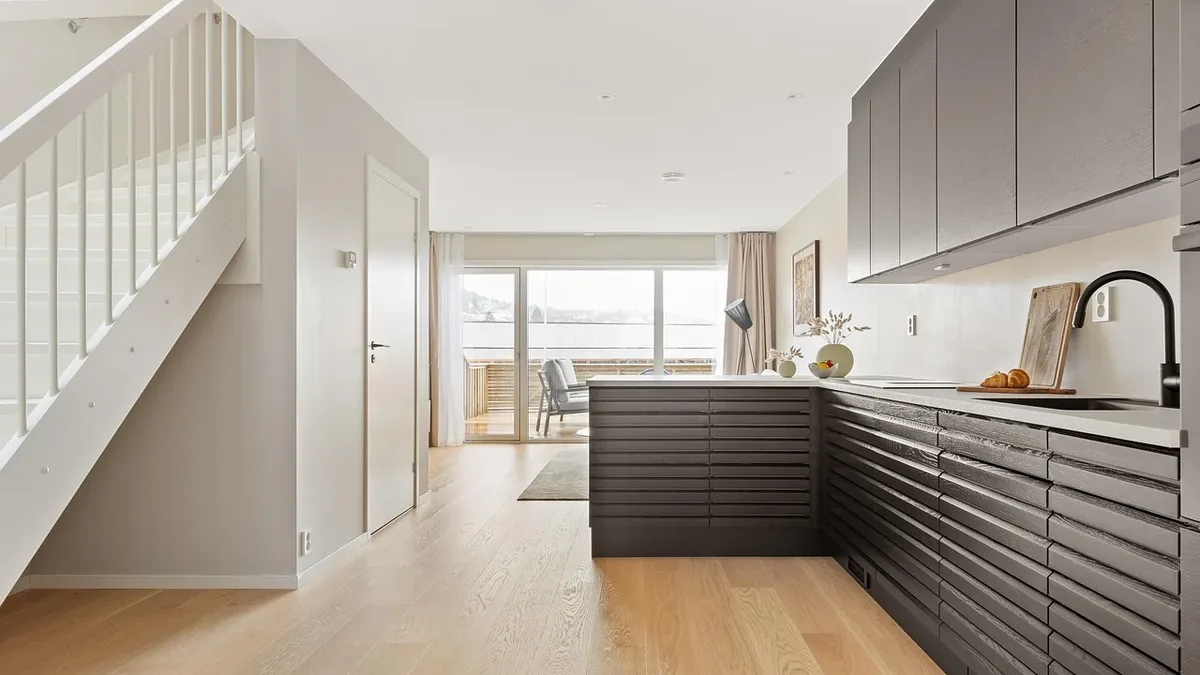
DeVOL Kitchen Design Balances Mediterranean Style
A kitchen designer details how a client's space uses color, open storage, and a vintage island to achieve an eclectic, lived-in Mediterranean feel...
Plug-in solar savings: the real numbers
Plug-in solar kits under 800VA are now legal in the UK, but savings are modest. Without a battery, realistic annual savings range from £40 to £110...

Lidl's Affordable Space-Saving Desk with Built-In Storage Now Available
Lidl introduces a budget-friendly, easy-to-assemble desk with integrated storage, ideal for small spaces. The Livarno model offers flexible...

The Importance of 2.4 GHz WiFi Band for Smart Home Devices
Disabling the 2.4 GHz WiFi band can cause connectivity issues for smart home devices, highlighting the need for both 2.4 GHz and 5 GHz bands in a...

Connecting Your Smartphone to a TV with a Cable: The Essential Adapters You Need
Learn how to connect your smartphone to a TV using a cable and discover the necessary adapters for a seamless experience.
Five Affordable Solutions to Maximize Closet Space and Keep Your Wardrobe Organized
As the end of summer approaches, many of us face the daunting task of changing our wardrobes and maximizing our closet space. Fortunately, there's no...