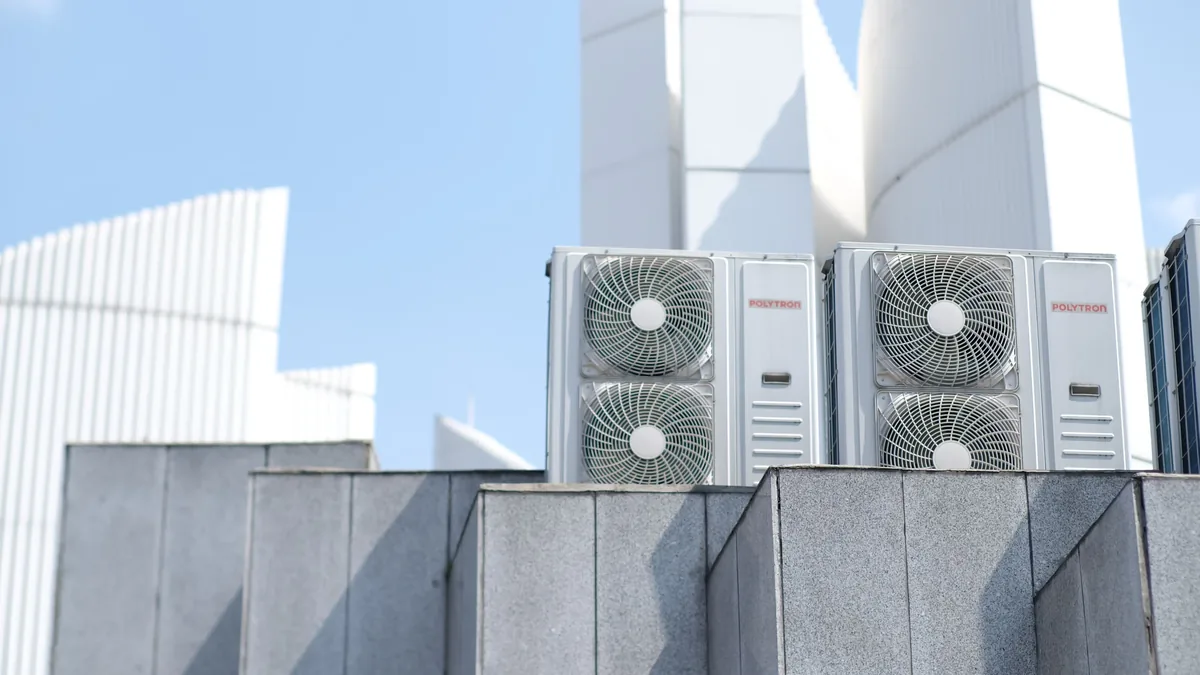
Aire Acondicionado Split
| Cooling capacity | Measured in BTU/h or kW |
|---|---|
| Power consumption | Measured in watts |
| Energy efficiency ratio (EER) | Ratio of cooling capacity to power input |
| Installation type | Wall-mounted split system |
| Typical room coverage | Varies by model and capacity |
| Operating voltage | Typically 220-240 volts |
| Refrigerant type | Varies by model and regulations |
| Noise level (indoor unit) | Measured in decibels (dB) |
Origin and history
The split-system air conditioner, known as "Aire Acondicionado Split" in Spanish, originated from technological developments in Japan in the late 1950s and early 1960s. The fundamental innovation was the separation of the noisy compressor and condenser components from the quiet air-handling evaporator unit. This division was pioneered by companies like Toshiba, which introduced early commercial and residential split systems during that period. The design addressed a key limitation of window units, which required a single packaged assembly installed in a wall or window opening. The technology spread globally over the following decades, becoming a dominant form of residential and light commercial cooling. Its adoption in varied climates worldwide has solidified its status as a standard appliance architecture.
What it is designed for
This appliance is designed to provide controlled cooling and dehumidification of the air within an enclosed space, such as a single room or an open-plan area. Its primary function is to extract heat and moisture from indoor air and reject that heat to the outdoors, thereby lowering the indoor temperature and improving comfort. The split design specifically aims to minimize operational noise inside the occupied space by locating the loudest components in an external unit. It is engineered for permanent installation, requiring connection to the electrical grid and a path for refrigerant lines between the indoor and outdoor sections. Many modern versions are also designed to provide heating by operating in reverse as a heat pump, moving heat from the outside air indoors. The system is intended for zoned climate control, allowing for independent temperature management of different rooms when multiple indoor units are connected to one outdoor unit.
Development and versions
Development from the initial two-component split has progressed to multi-split systems, where a single outdoor condenser can connect to multiple indoor evaporator units serving different zones. A significant evolution was the introduction of inverter compressor technology, which allowed the compressor speed to vary rather than simply cycling on and off. This inverter technology greatly improved energy efficiency, provided more precise temperature control, and reduced wear on components. Further versions include ducted split systems, where the indoor unit is concealed above a ceiling and distributes air through ductwork, and cassette-type units that are recessed into ceiling tiles. The refrigerant used has also evolved due to environmental regulations, shifting from R-22 to newer types like R-410A and now R-32, which have lower ozone depletion and global warming potential. Modern developments consistently integrate smart connectivity, allowing for control via mobile apps and integration with home automation systems.
Pros and cons
A primary advantage is its quiet indoor operation compared to window units, as the compressor is housed outside. The split system also offers superior energy efficiency for cooling discrete zones, avoiding the energy losses associated with ducted central air systems. Its installation flexibility allows for cooling rooms without windows suitable for window units or in buildings with restrictive aesthetics. A significant drawback is the complexity and cost of professional installation, which requires refrigerant line setup, electrical work, and drilling through walls. Common problems include refrigerant leaks over time, which impair performance and require a technician to repair, and the outdoor unit can be susceptible to damage from weather, debris, or corrosion. Owners often regret the choice if they underestimate the need for regular maintenance, such as cleaning filters and coils, leading to reduced efficiency, frozen coils, or premature failure; a common mistake is installing an oversized unit that short-cycles, failing to dehumidify the air properly.
Who it suits
This appliance suits homeowners or renters in permanent dwellings who seek a quiet, efficient, and permanent cooling solution for specific rooms or additions. It is particularly suited for climates with prolonged hot and humid seasons where reliable and effective dehumidification is as important as temperature reduction. The split system is a logical choice for buildings without existing ductwork, such as older homes, apartments undergoing renovation, or room additions where extending central ducting is impractical. It suits individuals willing to invest in professional installation for long-term performance and who have a suitable exterior wall or location for the condenser unit with proper clearance. This system is less suitable for those who move frequently or require a completely portable solution, or for individuals in rental properties where structural modifications for installation are prohibited. It also suits users interested in the heating capability of a heat pump model for moderate winter climates, providing year-round climate control from a single system.