Whirlpool
| Country of origin | United States |
|---|---|
| First created | 1911 |
| Original use | Electric motor-driven wringer washer |
| Product category | Major home appliances |
| Typical power requirement | Varies by appliance and region |
| Typical voltage compatibility | Compatible with local grid standards (e.g., 120V/60Hz or 230V/50Hz) |
| Common product lines | Laundry, refrigeration, cooking, dishwashing |
| Parent corporation | Whirlpool Corporation |
Origin and history
Whirlpool Corporation originated in the United States in the early twentieth century. The company was founded as the Upton Machine Company in Michigan, initially focusing on the manufacture of electric motor-driven wringer washers. The Whirlpool brand name itself was introduced in the late 1940s for a revolutionary automatic washing machine that featured a spinning perforated basket. Throughout the mid-twentieth century, the company expanded through strategic mergers and acquisitions, including the purchase of the Seeger Refrigerator Company and a merger with the KitchenAid brand. This growth established Whirlpool as a dominant North American appliance manufacturer before it evolved into a global corporation. Its corporate headquarters remain in Benton Harbor, Michigan, reflecting its enduring roots in the American Midwest.
What it is designed for
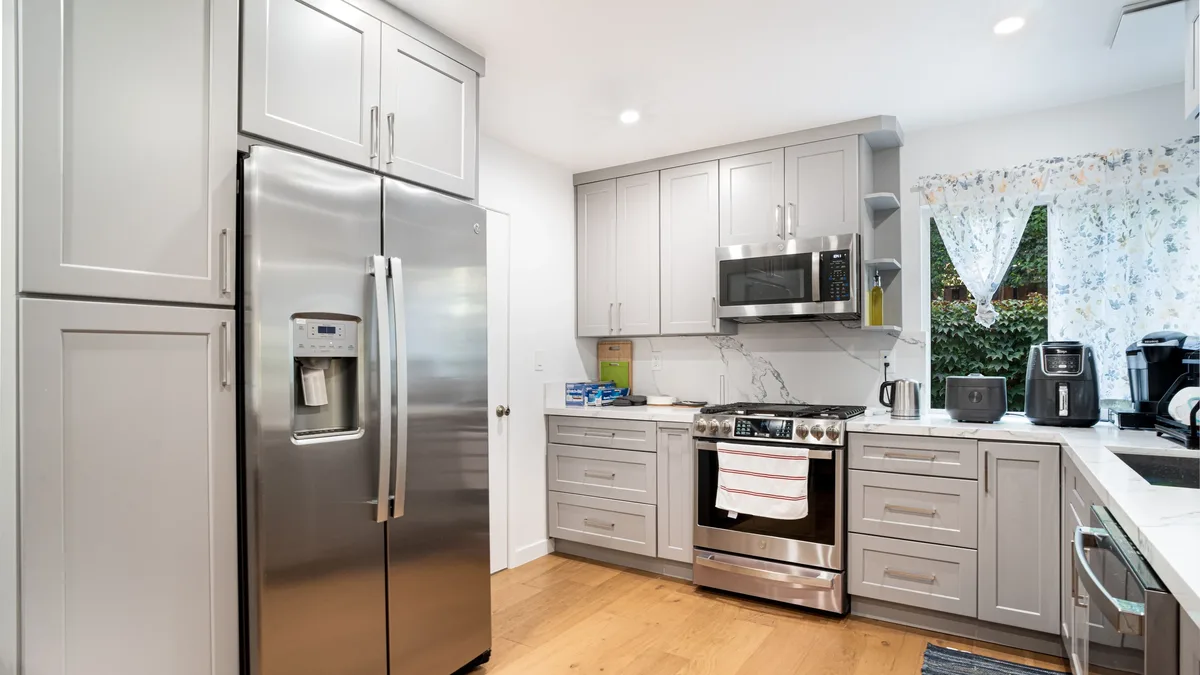
Whirlpool appliances are designed for the core domestic tasks of food preservation, preparation, cleaning, and storage within a household. The brand's primary product categories include refrigerators, freezers, cooking appliances such as ranges and ovens, dishwashers, laundry appliances like washers and dryers, and microwave ovens. These appliances are engineered to perform their specific functions reliably over many years of daily use, emphasizing consistent performance rather than niche or luxury features. The design philosophy historically prioritizes practical functionality, straightforward user interfaces, and durability suitable for family homes. Whirlpool products are generally positioned to serve the broad middle market, offering a balance of essential features, energy efficiency, and affordability. Their design scope encompasses both freestanding and built-in models to accommodate various kitchen and laundry room layouts.
Development and versions
Whirlpool's product development has been characterized by incremental technological improvements and model diversification across its extensive appliance lines. Early versions of their washing machines evolved from simple wringer models to automatic top-loading machines with agitators, which became an industry standard for decades. In refrigeration, development moved from basic single-door models to sophisticated bottom-freezer, side-by-side, and French door configurations featuring multi-temperature zones and humidity controls. Cooking appliance versions expanded from basic electric coil ranges to include smooth-top radiant elements, convection ovens, and integrated induction cooktops. The brand has consistently integrated new features over time, such as steam cycles in laundry, soil sensors in dishwashers, and electronic touch controls across categories. Recent development focuses heavily on enhancing energy efficiency to meet stricter global standards and incorporating limited connectivity features, though Whirlpool typically avoids positioning itself at the forefront of smart home technology.
Pros and cons
A significant pro of Whirlpool appliances is their widespread availability of service networks and replacement parts, which simplifies long-term maintenance and repair. Their generally straightforward mechanical and electrical designs are often more accessible for technicians to diagnose and fix compared to some proprietary or ultra-compact systems. A common con is that certain budget-tier models can exhibit cost-cutting in components like plastic door hinges or shelving, which may become less robust over a decade of use. Users sometimes regret choosing Whirlpool's most basic models when expecting premium performance, as these versions may lack the insulation, balance systems, or precise temperature controls of higher-end brands. A frequent mistake is purchasing an oversized Whirlpool refrigerator or range without verifying the precise installation clearances, as their standard dimensions can vary slightly and complicate fits in older cabinetry. Another noted drawback is that some mid-range laundry models can be louder during spin cycles or less effective at removing stubborn stains compared to specialty front-loading competitors.
Who it suits
Whirlpool appliances suit homeowners and landlords seeking reliable, no-frills performance for primary household functions without a premium price tag. They are a pragmatic choice for first-time home buyers or those furnishing rental properties where durability and serviceability are prioritized over cutting-edge innovation. The brand suits individuals who prefer familiar, traditional controls and are less interested in navigating complex digital interfaces or smart appliance ecosystems. Households with standard laundry and kitchen needs, who do not require commercial-grade power or specialty cooking modes, will typically find Whirlpool products adequately specified. It is also a suitable brand for consumers who value having a local authorized service provider available, as Whirlpool's extensive dealer network is a key advantage in many regions. Finally, their broad product range suits consumers looking to bundle multiple appliances from a single brand for a coordinated kitchen suite, often facilitated through package deals at large retail outlets.