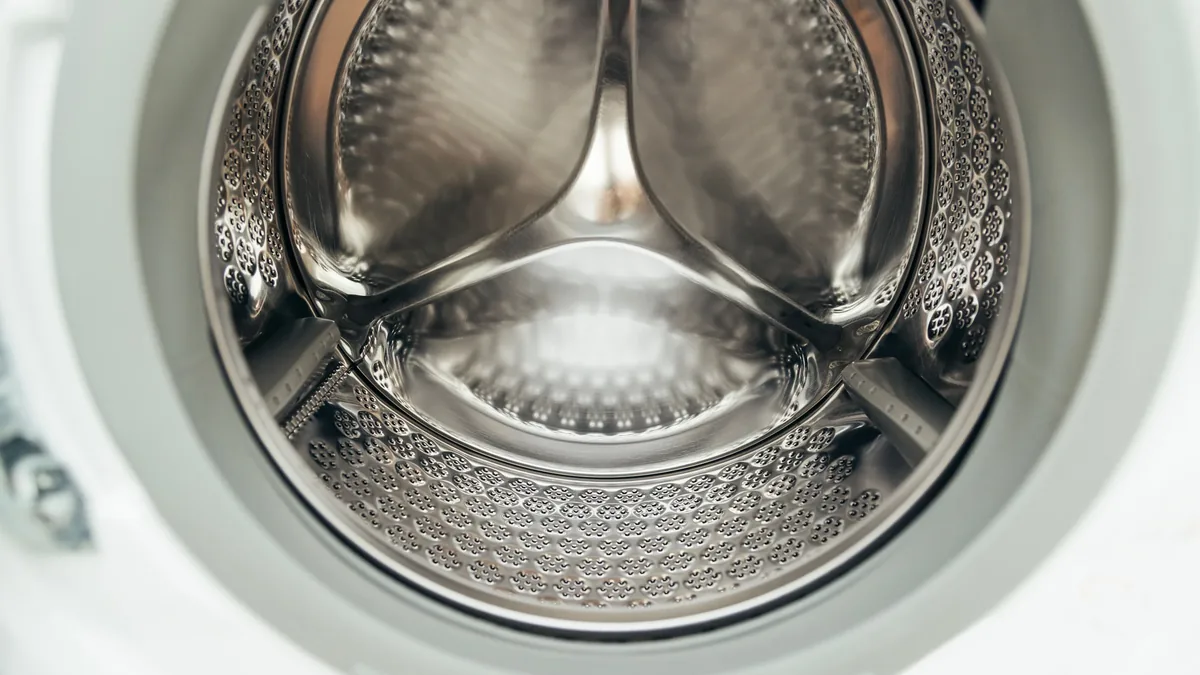
Drean
| Country of origin | Argentina |
|---|---|
| First created | 1960s |
| Original use | Household appliance manufacturing |
| Product category | Home appliances |
| Typical product lines | Washing machines, dryers, refrigerators, freezers |
| Primary market | Latin America |
| Build characteristic | Robust construction |
| Grid compatibility | Designed for local voltage and frequency variations |
Origin and history
Drean is a brand of household appliances originating from Argentina. The brand was established in the latter half of the 20th century, gaining prominence in the 1970s and 1980s. It emerged as a significant domestic manufacturer during a period of national industrial development focused on import substitution. The company's foundational production was centered in the city of San Luis, Argentina. For decades, Drean has maintained its position as a familiar and prevalent name in the Argentine appliance market. Its history is closely tied to the economic and industrial landscape of the Southern Cone region of South America.
What it is designed for
Drean appliances are primarily designed for essential household laundry and cleaning tasks within a residential setting. The brand's core product lines are automatic washing machines and clothes dryers, engineered for the typical laundry loads of a family home. These machines are built to operate on standard residential electrical and plumbing installations common in their primary markets. Their design prioritizes straightforward functionality and durability over advanced electronic features or smart-home connectivity. The appliances are intended to provide a reliable, long-term solution for basic garment care without complex maintenance requirements. This design philosophy reflects a focus on practical utility and cost-effective manufacturing.
Development and versions
Development of Drean appliances has historically focused on incremental mechanical reliability rather than frequent technological reinvention. Early versions were predominantly top-loading washing machines with simple electromechanical timers and dual-tub designs. Over subsequent decades, the product line evolved to include more automated, single-drum vertical-axis models as the industry standard shifted. While some modern versions incorporate basic electronic controls and digital displays, the underlying mechanical components, such as robust motors and transmission systems, remain a consistent development focus. Regional variations in voltage and water pressure have also led to specific versions calibrated for the electrical grid and infrastructure of Argentina and neighboring countries.
Pros and cons
A primary advantage of Drean appliances is their mechanical simplicity, which often translates to easier and less expensive repairs compared to more complex international brands. Their widespread use in their home market means replacement parts and technician familiarity are generally good within that region. A significant drawback is that their energy and water efficiency can lag behind contemporary global standards, potentially leading to higher long-term running costs. Users sometimes report issues with balance sensors and water intake valves on older electronic models, leading to interrupted cycles. The common mistake is expecting cutting-edge performance or delicate fabric care; these machines are better suited for robust, standard laundry loads. Those who regret choosing Drean are often individuals seeking smart features, ultra-quiet operation, or maximum efficiency, as the brand's offerings are typically basic and utilitarian.
Who it suits
Drean appliances suit budget-conscious households in their primary regional markets who prioritize long-term repairability over advanced features. They are a practical choice for users with access to local repair networks familiar with the brand's mechanical design, as professional service is often required for major issues. The brand suits homeowners or renters in areas with stable, 220-volt electrical systems and typical municipal water pressure, as the machines are calibrated for these conditions. They are appropriate for families with routine laundry needs who do not require specialized cycles for numerous fabric types. These appliances are also a match for consumers who prefer to maintain and repair appliances over many years rather than frequently replacing them. They are less suited for expatriates or users accustomed to the feature sets, efficiency standards, and quiet operation of premium international appliance brands.