What Each Appliance Uses
Origin and history
What Each Appliance Uses is a conceptual framework for consumer energy education that originated in North America and Europe during the late 20th century. Its development was driven by the oil crises of the 1970s, which sparked widespread public interest in energy conservation and household budgeting. Utility companies and government energy agencies began producing rudimentary pamphlets listing typical appliance energy consumption to help customers manage costs. The concept evolved from simple paper charts into more sophisticated online calculators and databases by the early 2000s, paralleling the rise of home internet access. This informational approach solidified as a standard reference tool promoted by energy efficiency advocates and consumer protection groups. Its history is intrinsically linked to the deregulation of energy markets and the increasing complexity of household electrical loads.
What it is designed for
This framework is designed to provide homeowners and renters with a practical understanding of the operational costs of common electrical devices. Its primary purpose is to translate abstract kilowatt-hour data from a utility bill into concrete, per-appliance running costs based on local electricity rates. A core function is to identify "energy hog" appliances that contribute disproportionately to monthly expenses, enabling targeted replacement or behavioral change. Furthermore, it is intended to educate users on the relationship between an appliance's power draw (watts), its usage duration, and the resulting financial impact. The design also serves to inform preparedness, allowing individuals to estimate the load requirements for backup power systems like generators during grid outages. Ultimately, it aims to demystify household energy consumption, empowering consumers to make informed purchasing and usage decisions.
Development and versions
Early versions were static, printed tables published by utility companies, often featuring estimated annual operating costs for a limited set of major appliances like refrigerators and water heaters. The development of standardized EnergyGuide labels in many countries, starting in the late 1970s and 1980s, provided a regulated, comparative version of this data for new appliances. The digital era saw the creation of interactive online calculators where users could input their local utility rate and specific hours of use for a more personalized estimate. Modern versions incorporate real-time energy monitoring data from smart plugs and whole-home energy meters, allowing for appliance-specific consumption tracking rather than reliance on averages. Database versions have also expanded to include niche and plug-load devices like gaming consoles and network equipment, which were historically overlooked. The ongoing development focuses on integrating with home energy management systems and providing granular data to assess an appliance's vulnerability to grid instability.
Pros and cons
A significant pro is that this framework provides a tangible entry point for energy literacy, making a complex utility bill understandable by breaking it into appliance-sized pieces. It effectively highlights the long-term cost implications of inefficient appliances, justifying investments in modern, efficient models. However, a major con is its frequent reliance on national averages for both power ratings and usage patterns, which can severely misrepresent individual costs if a user's habits or local electricity rates differ. People often regret using these estimates as absolute figures, leading to confusion when their actual bill does not match the calculated sum, a common mistake being the omission of vampire power from devices in standby mode. The framework can also become quickly outdated as appliance technology improves, and it typically fails to account for the surge or startup power required by motors, which is critical for sizing backup generators. Furthermore, it rarely incorporates the degradation of efficiency over an appliance's lifespan, presenting a best-case scenario that may not hold true for older units.
Who it suits
This reference approach best suits new homeowners, renters, and individuals experiencing unexpectedly high electricity bills who need a foundational understanding of where their power is being consumed. It is particularly useful for those considering the purchase of a major appliance, as it allows for cost comparisons between different models and efficiency classes over the product's lifetime. Budget-conscious households and individuals interested in reducing their environmental footprint will find the data instrumental for prioritizing which energy-saving upgrades will offer the best return. The framework also suits individuals planning for energy resilience, such as those investing in solar battery systems or generators, as it provides a baseline for estimating essential loads during a grid failure. However, it is less suited for households with highly atypical usage patterns or very old appliance stocks without seeking device-specific measurements. Ultimately, it serves as an excellent first-step educational tool for any consumer seeking to move from passive bill payment to active energy management.
Latest What Each Appliance Uses news
Latest reporting
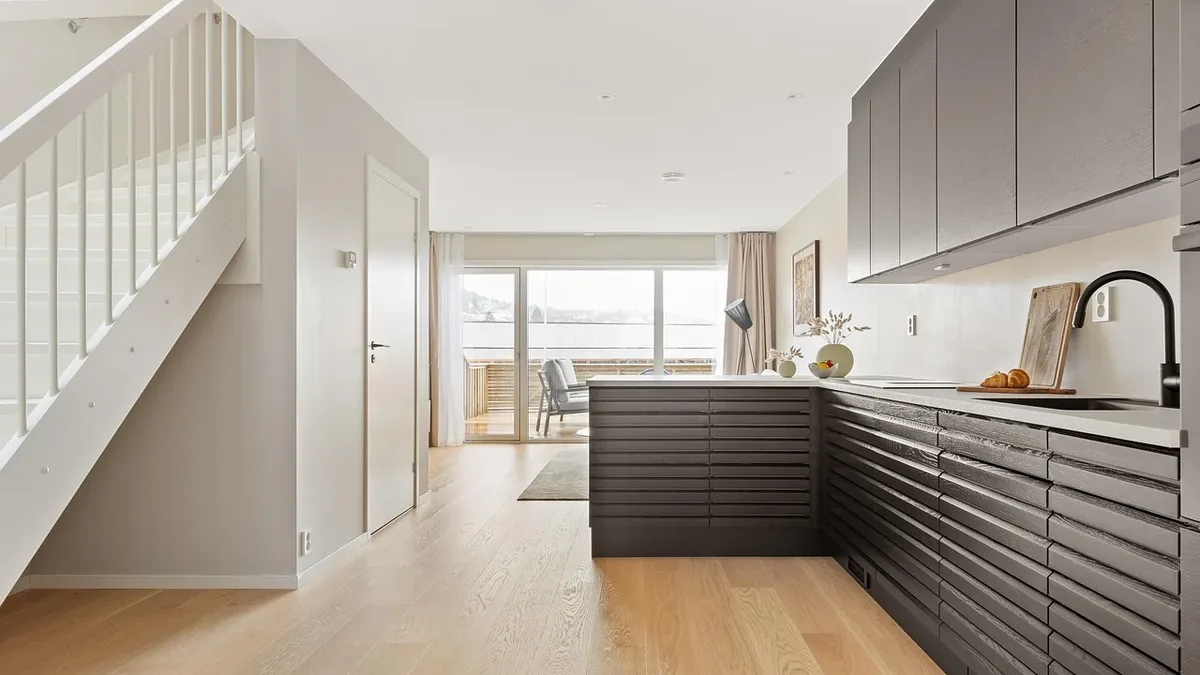
DeVOL Kitchen Design Balances Mediterranean Style
A kitchen designer details how a client's space uses color, open storage, and a vintage island to achieve an eclectic, lived-in Mediterranean feel...
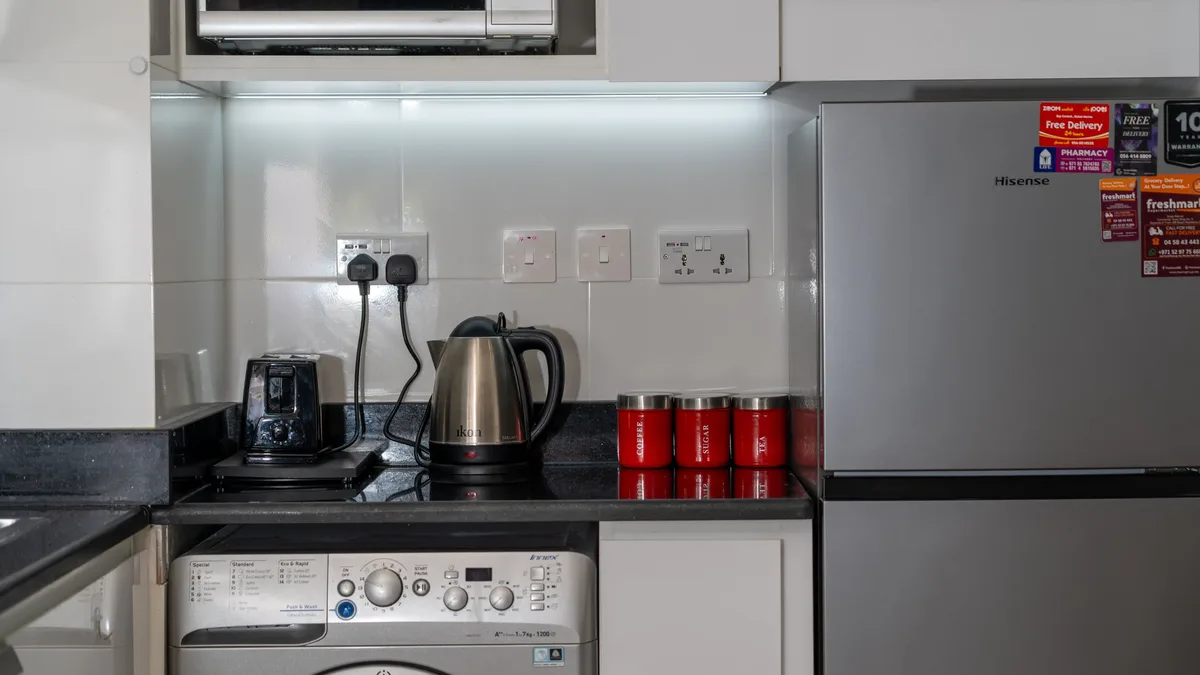
Plug-In Solar Panels: What They Can and Cannot Power
Experts detail which household appliances can be run on plug-in solar panel output and which energy-hungry devices remain beyond their capacity.
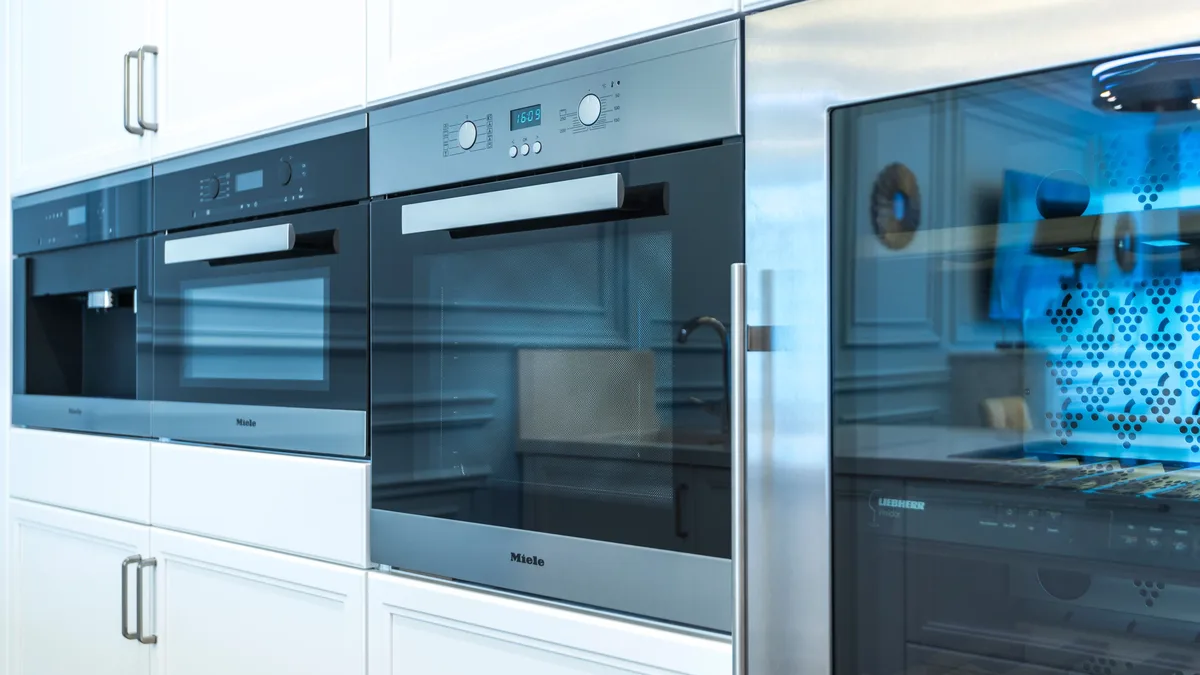
Samsung Opens German Showroom for Built-In Kitchen
Samsung has opened a permanent built-in appliance showroom in Löhne, Germany, to serve as a hub for European kitchen industry partners and advance its
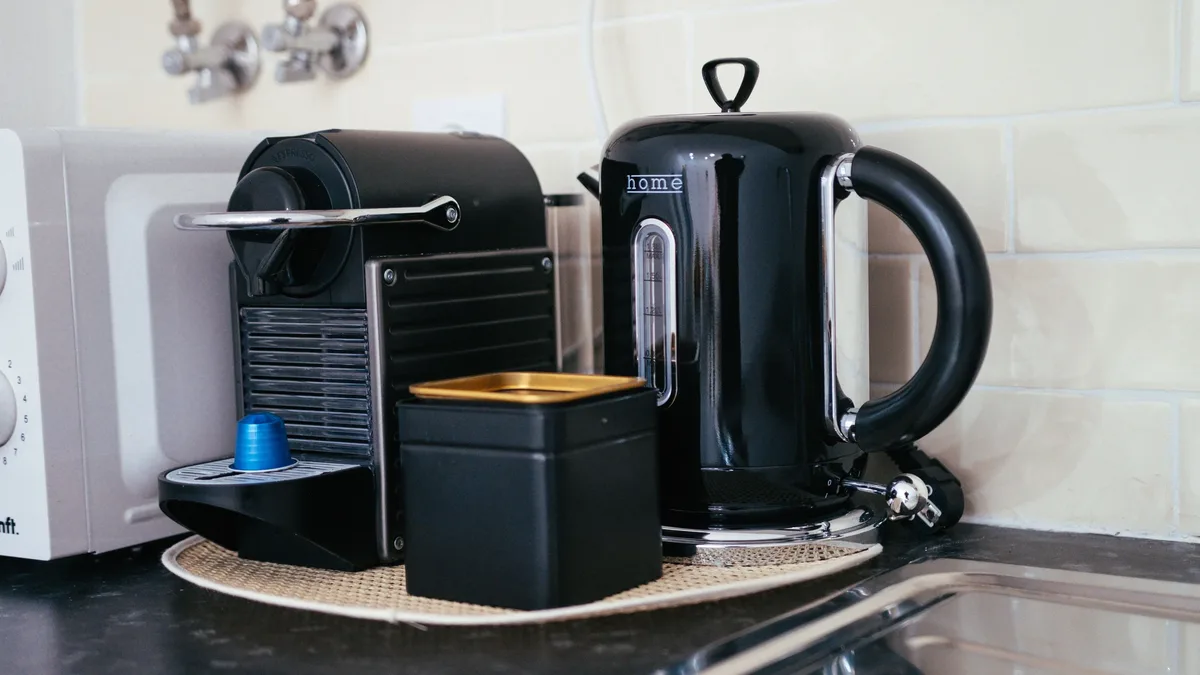
Ninja Crispi Microwave and Air Fryer Combo Tested
A review of the Ninja Crispi Microwave and Air Fryer finds it a practical, efficient combo appliance that excels at air frying and microwaving...
Ninja SLUSHi Twist Smart Frozen Drink Maker Review
The Ninja SLUSHi Twist is a large countertop appliance that makes dual-flavor slushies and frozen cocktails without ice.
Midea Owns 10 Major Home Appliance Brands
Midea Group, a Chinese appliance giant, owns a portfolio of 10 home appliance brands ranging from budget to luxury, including Toshiba, Eureka, and...