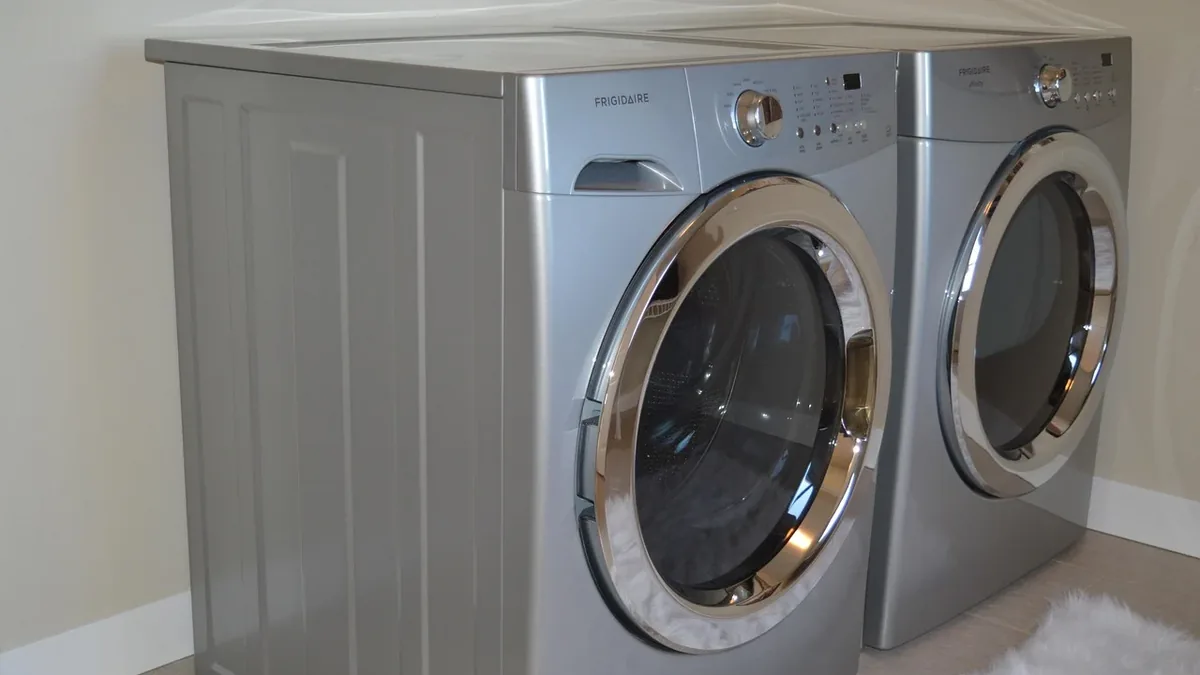
Secarropas
| Appliance type | Tumble dryer (condenser or vented) |
|---|---|
| Country of origin | United States |
| First created | 1930s |
| Original use | Drying laundry indoors independent of weather |
| Heat source | Electric element or heat pump |
| Venting requirement | Vented or condenser (non-vented) |
| Typical capacity | 7 to 10 kilograms |
| Energy efficiency class | A+++ to D (EU scale, varies by model) |
Origin and history
The secarropas is a domestic appliance that originated in the United States in the early 20th century. Its development paralleled the widespread adoption of the electric washing machine, as a dedicated solution for drying laundry independent of weather conditions. Early models were introduced commercially in the 1930s, following advancements in electric motor and heating element technology. The initial designs were primarily vented, expelling warm, moist air directly outside the home through a duct. Its adoption spread significantly in the post-World War II economic boom, particularly in North America, where it became a standard household fixture. The term "secarropas" itself is the Spanish common name for the appliance, directly describing its function of drying clothes.
What it is designed for
The secarropas is designed to mechanically dry laundry after it has been washed, removing residual moisture through the application of heat and air movement. Its primary function is to provide a fast, consistent, and weather-independent alternative to line-drying textiles outdoors. The appliance is engineered to handle a variety of fabric types, often through adjustable heat settings and moisture sensors that aim to prevent overdrying. It is specifically built to accommodate the average load sizes of modern washing machines, with drums sized to allow tumbling for even drying. A key design consideration is the management of lint, with built-in filtration systems to capture fibers shed from fabrics during the drying process. Furthermore, it is intended to operate within a dedicated utility space, garage, or bathroom, accounting for the need for ventilation and a substantial electrical connection.
Development and versions
Development has largely focused on improving energy efficiency, fabric care, and convenience features from the early vented models. A major version is the condenser secarropas, which became prominent in the late 20th century, particularly in European markets where venting to the outside is often impractical. Condenser models cool the moist air internally, collecting the water in a tank or draining it away, eliminating the need for an external wall vent. Another significant version is the heat pump dryer, a 21st-century innovation that recycles heat within the system, offering substantially higher energy efficiency at a higher initial purchase cost. Modern iterations commonly include electronic controls, multiple drying programs for specific fabrics, steam functions to reduce wrinkles, and connectivity features. The core mechanical principle of a motorized drum turning clothes within a heated airflow has remained consistent, even as control systems and thermal efficiency have advanced.
Pros and cons
A primary advantage is the profound convenience and time savings it offers, providing dry, ready-to-wear laundry in under an hour regardless of climate or season. It can also be gentler on certain fabrics than the tension and UV exposure of a clothesline, and the tumbling action helps reduce wrinkles and soften textiles. However, a significant con is its high energy consumption, as it is typically one of the most power-intensive appliances in a home, directly impacting electricity bills. The heat and tumbling can be harsh on delicate fabrics, leading to shrinkage, wear, and damage to elastics if incorrect settings are used, a common user error. Vented models can negatively impact indoor air quality and heating/cooling efficiency by expelling conditioned air, while condenser models require regular cleaning of filters and condensers to prevent mold and maintain performance. Many users regret purchasing an oversized unit for small, frequent loads, as running a dryer partially full is inefficient, or choosing a model without a moisture sensor that leads to overdrying and wasted energy.
Who it suits
This appliance best suits households with high laundry volumes, such as families with children, where the speed and capacity justify the operational cost and space requirement. It is particularly suited for residents in apartments, urban environments, or regions with frequent rain, high humidity, or cold climates where outdoor line-drying is unreliable or prohibited. Homeowners with dedicated utility rooms and the ability to install proper, short ventilation ducts are ideal candidates for traditional vented models for their lower upfront cost. Condenser or heat pump models suit renters or those in properties where making structural modifications for a vent is impossible, though they require a commitment to regular maintenance. It is less suited for individuals or couples with very small laundry loads, those in arid climates where line-drying is swift and effective, or households with severe budget constraints where the ongoing electricity expense would be a burden. Ultimately, it suits users who prioritize convenience and time over energy savings and who have the electrical infrastructure to support its substantial power draw.