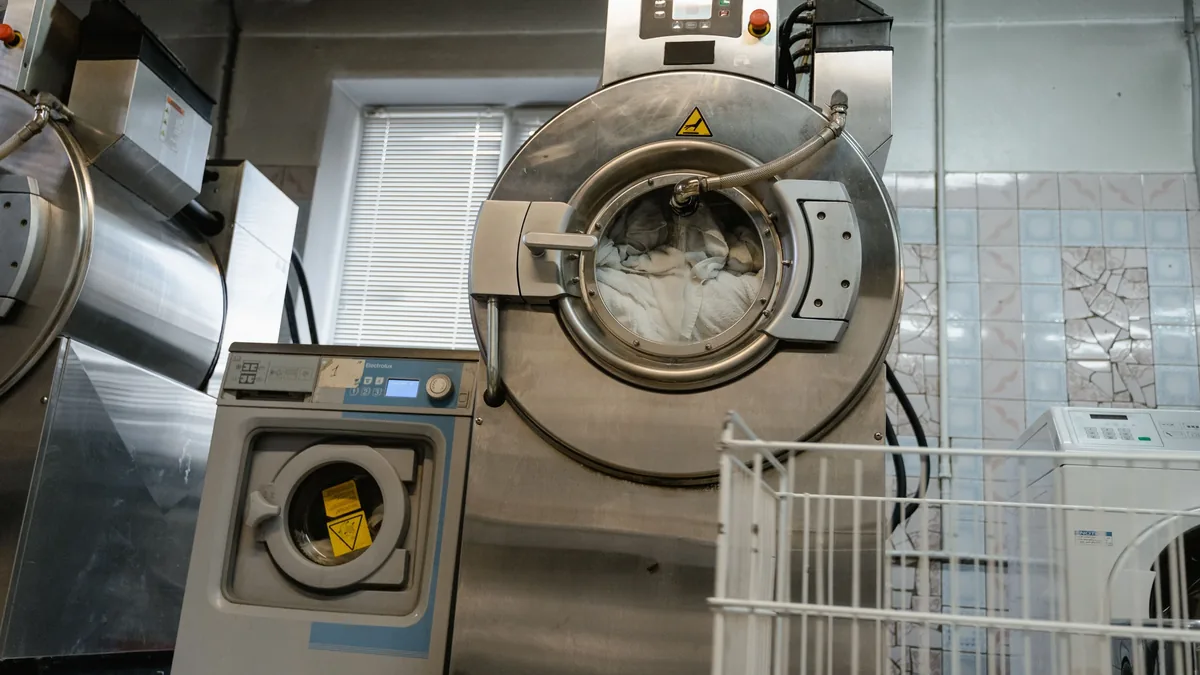
Lavarropas
| Country of origin | United States |
|---|---|
| First created | 1910s |
| Original use | Automating the washing of textiles |
| Capacity range | 5 to 12 kilograms |
| Energy efficiency class | A to G |
| Cycle types | Standard, delicate, quick, heavy-duty |
| Water connection | Cold, hot, or both |
| Common voltage | 220–240 volts (varies by region) |
Origin and history
The lavarropas, known in English as a washing machine, is a domestic appliance with origins in the early industrial era of the 18th and 19th centuries. The first mechanical washing devices were developed in Europe and North America, with early patents filed in England and the United States. These initial designs were hand-cranked wooden drums or ribbed washboards, far removed from modern electric machines. The transition to motorized machines for home use began in earnest in the early 20th century, with the first electric washing machines appearing in the 1900s. Major manufacturing for household adoption accelerated in the post-World War II economic boom, making the appliance a standard fixture in developed nations. Its development is closely tied to the broader electrification of homes and the evolution of plumbing infrastructure.
What it is designed for
A lavarropas is designed to automate the labor-intensive process of cleaning textiles, primarily clothing, bedding, and towels. Its core function is to agitate or tumble fabrics in a water and detergent solution to loosen and remove dirt, oils, and stains. The machine then rinses the load to remove soap and suspended soil, followed by a spin cycle to extract excess water to expedite drying. Modern machines are engineered to handle a variety of fabric types through programmable cycles that adjust water temperature, agitation intensity, and spin speed. This design directly replaces the manual steps of soaking, scrubbing, wringing, and rinsing that characterized laundry work for centuries. The appliance's purpose is to significantly reduce the time and physical effort required for household laundry maintenance.
Development and versions
Development has progressed from simple, manually-operated mechanisms to fully automated, electronically controlled appliances. Early versions included the twin-tub system, which separated the washing and spinning functions into two distinct compartments within a single unit. The major evolutionary step was the introduction of the automatic front-loading washing machine, which uses a horizontal-axis drum that lifts and drops clothes through the wash water. This was followed by the top-loading automatic machine, predominantly in North America, which typically uses a vertical-axis agitator or an impeller. Recent developments include high-efficiency models that use significantly less water and energy, integrated smart features for remote control, and specialized cycles for specific fabrics. Variations now also encompass compact models for small households, heavy-duty commercial machines, and combination washer-dryer units.
Pros and cons
A primary advantage of a lavarropas is the substantial time savings and reduction in physical labor compared to hand washing. Modern high-efficiency models also offer significant reductions in water and energy consumption per load when used correctly. The cons include a high initial purchase cost and the complexity of repairs, which often require specialized technicians. A common mistake is overloading the drum, which leads to poor cleaning results, unbalanced spins causing loud noise and vibration, and increased wear on the machine's suspension and drive system. Users frequently regret choosing a machine with an excessive capacity for their actual needs, as it leads to running underfilled, inefficient cycles. Another notable drawback is the dependency on a reliable water supply, drainage, and electrical infrastructure, making the appliance vulnerable to local utility failures.
Who it suits
A lavarropas suits virtually any household with access to the necessary utilities and space for installation, as it addresses a universal cleaning need. It is particularly suited for families or shared living situations with high volumes of laundry, where the efficiency gain is most pronounced. Individuals with physical mobility constraints or chronic pain conditions benefit greatly from the automation it provides. Conversely, those in very small living spaces without dedicated plumbing hookups, such as some studio apartments, may find a compact, portable model or may rely on communal laundry facilities. Households in regions with unstable electrical grids or frequent water shortages may find a conventional automatic machine impractical, making manual alternatives or highly robust, simple models more suitable. The appliance is a fundamental fit for modern domestic life where time and convenience are prioritized.