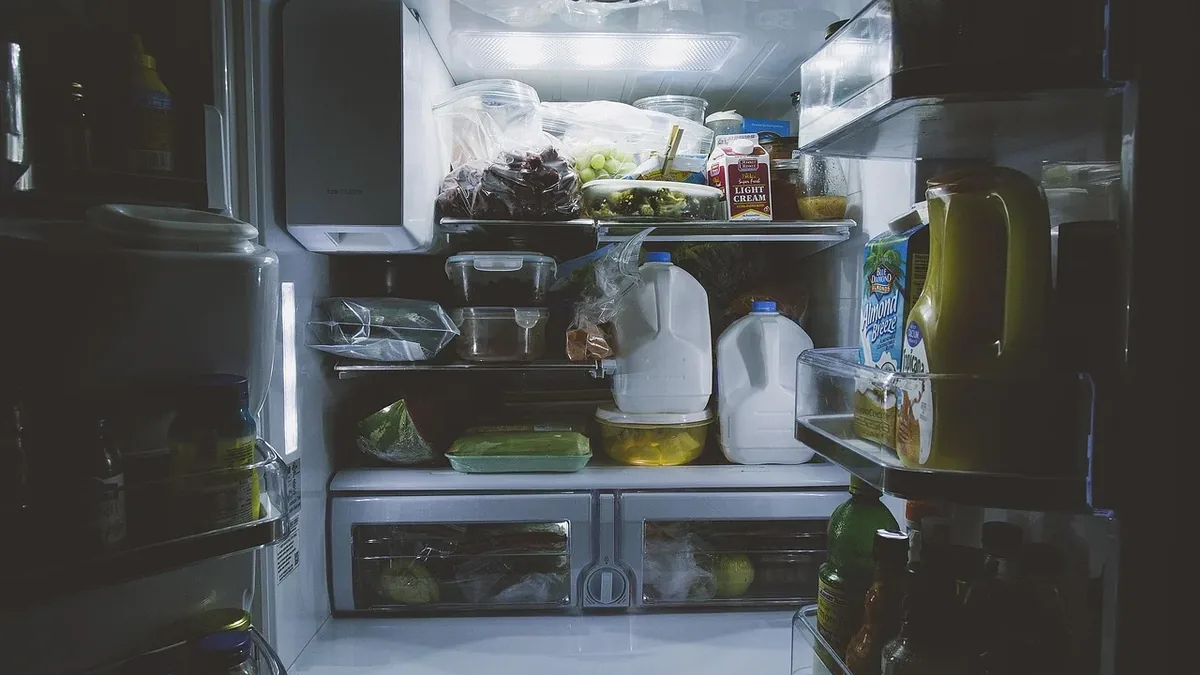
Heladera
| Country of origin | Argentina |
|---|---|
| First created | Mid-20th century |
| Original use | Domestic food preservation |
| Energy efficiency class | A to G (varies by model) |
| Typical capacity | 250 to 600 liters |
| Common configurations | Top freezer, bottom freezer, side-by-side |
| Voltage requirement | 220V (standard for local grid) |
| Climate class | SN to T (varies by model) |
Origin and history
The heladera is a common household appliance originating in Latin America, with its widespread adoption and local manufacturing occurring throughout the 20th century. Its development paralleled the electrification of urban centers in the region, becoming a standard kitchen fixture from approximately the 1930s onward. The term itself is derived from the Spanish word "hielo," meaning ice, reflecting its primary function of preserving food at low temperatures. Early models were often simple iceboxes before the technology evolved into electrically powered compression refrigeration units. Its design and engineering were heavily influenced by North American and European refrigeration technology, adapted for local manufacturing capabilities and market preferences. The appliance became a symbol of modern domestic life and food security in many households across the continent.
What it is designed for
A heladera is designed for the preservation of perishable food and beverages through consistent refrigeration. Its primary purpose is to slow bacterial growth and enzymatic activity in items like dairy, meats, fruits, and vegetables, thereby extending their edible lifespan. The appliance maintains a compartment at a temperature typically between 2°C and 5°C, which is suitable for most everyday cooling needs. Many models also incorporate a separate freezer compartment designed to store frozen goods or create ice, operating at temperatures below 0°C. Beyond basic preservation, it is engineered to provide organized storage with adjustable shelves, drawers, and door compartments to accommodate various package sizes and types. The design fundamentally aims to reduce food waste and provide convenient access to chilled consumables within a domestic environment.
Development and versions
Development of the heladera has progressed from basic absorption coolers and small compression units to the diverse, feature-rich models available in recent decades. Initial versions were often single-door units with a small frozen compartment inside the main chilling area, requiring manual defrosting. The evolution included the introduction of separate top or bottom-mounted freezer sections, improving energy efficiency and organization. Later developments brought frost-free technology, which uses a fan and heating element to prevent ice buildup, eliminating the need for manual defrosting cycles. Modern versions often include features like digital temperature controls, energy-saving modes, specialized humidity-controlled crispers for produce, and door alarms. The current market offers a spectrum from basic, durable models focused on reliability to advanced units with smart connectivity and multi-airflow systems for precise temperature management.
Pros and cons
A significant pro of a typical heladera is its robust construction, often prioritized for longevity and the ability to withstand voltage fluctuations common in some regional grids. The design philosophy frequently emphasizes ample storage capacity and practical compartmentalization suited to local shopping habits and family sizes. A common con is that efficiency standards can lag behind those of appliances from other markets, potentially leading to higher long-term running costs if the unit lacks an inverter compressor or high-efficiency insulation. Users sometimes regret choosing oversized models that exceed their actual needs, as the larger internal volume consumes more energy regardless of how full it is. A frequent point of failure involves the door seals degrading over time, which allows cold air to escape and forces the compressor to run continuously, drastically increasing electricity consumption. Another common mistake is placing the appliance in a poorly ventilated space or in direct sunlight, causing the cooling system to overwork and shortening the unit's operational life.
Who it suits
A heladera suits households in regions with established electrical grids that prioritize appliance durability and straightforward functionality over cutting-edge efficiency features. It is particularly suited to larger families or those who shop less frequently, as many models offer substantial storage volume capable of holding a week's worth of groceries. The appliance fits environments where repair services are readily available for common mechanical components, valuing serviceability over disposability. Basic, manually defrosted models suit budget-conscious consumers or areas with highly unstable power supplies where simpler technology is less prone to damage from surges. Frost-free versions suit users in humid climates who wish to avoid the routine maintenance of defrosting and who have more stable household electricity to support the additional fans and heaters. Ultimately, it suits any user needing reliable, long-term food preservation who accepts that operational costs may be higher compared to the most efficient global models.