Rice Cookers
Origin and history
The electric rice cooker is a kitchen appliance that originated in Japan. Its initial development occurred in the mid-20th century, with the first commercially successful automatic model launched in the 1950s. This innovation was driven by the desire to automate the precise process of cooking rice, a staple food throughout Asia. Early models utilized a simple bimetal thermostat mechanism to switch from cooking to warming once the water was absorbed and the temperature rose. The invention is widely credited to Japanese companies responding to post-war electrification and domestic demand. Its popularity spread rapidly across East and Southeast Asia before becoming a common global kitchen appliance.
What it is designed for
A rice cooker is specifically designed to automate the cooking of polished white rice by applying consistent heat and controlling the cooking cycle. Its primary function is to boil or steam rice until the water is fully absorbed, then automatically switch to a low-temperature warming mode to keep the rice ready to eat. The sealed cooking environment is engineered to prevent boiling over and to manage steam release safely. Beyond basic white rice, most models can effectively cook other grains like brown rice, quinoa, or barley, though cooking times will vary. Many modern units also include settings for cooking porridges, steaming vegetables, or even baking simple cakes. The fundamental design goal is to produce consistently cooked rice with minimal user intervention, eliminating the need for pot-watching or timing.
Development and versions
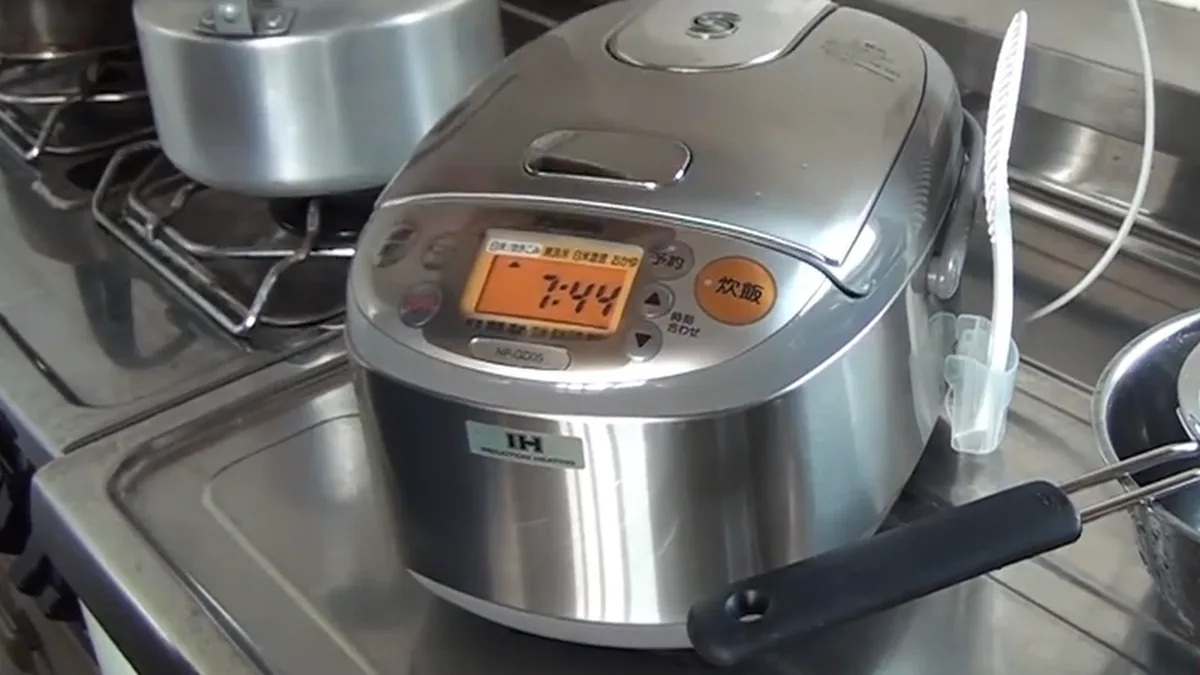
Development has progressed from basic single-button thermal cookers to sophisticated computerized models with multiple functions. The initial breakthrough was the automatic keep-warm function, which relied on a magnetic thermostat that released once the pot's temperature exceeded 100°C. Subsequent versions introduced microcomputer-controlled models in the 1980s, which could adjust cooking time and temperature for different rice types. Induction heating (IH) technology was later incorporated, using electromagnetic waves to heat the entire inner pot evenly for more precise control. Multicooker versions have since blurred the lines, integrating rice cooking as one function among many like pressure cooking and slow cooking. The latest developments often include fuzzy logic technology, where a microprocessor makes minor adjustments to the heating cycle based on feedback from sensors.
Best Rice Cookers
Determining the best rice cooker depends heavily on the user's volume needs, desired features, and budget. For households cooking rice daily, a well-made Japanese-brand microcomputer or induction heating model with a non-stick inner pot is often considered superior for consistency. Large families or those who entertain frequently typically benefit from a cooker with a capacity of at least 10 cups (uncooked) to ensure sufficient quantity. For individuals or couples, a compact 3- to 5-cup model is usually adequate and saves counter space. Models with a durable inner pot material, such as thick aluminum or copper-coated, are valued for even heat distribution and longevity. Simple thermal plate cookers remain a reliable and economical choice for those who only need basic functionality. High-end models with multiple programmable settings and steaming trays offer the greatest versatility for diverse cooking tasks.
Rice Cookers brands
Major brands in the rice cooker market are largely from Japan, Korea, and China, reflecting the appliance's regional importance. Japanese brands like Zojirushi, Panasonic, and Tiger are renowned for their technological innovation, build quality, and reliability in core rice-cooking functions. Korean brands such as Cuckoo and Hongjin are known for their advanced pressure cooking rice cookers and stylish designs. Chinese manufacturers, including brands like Midea and Supor, produce a vast range of models that dominate the value-oriented and mid-range market segments. Several Western appliance companies, like Philips and Russell Hobbs, also offer rice cookers, often as part of a broader multicooker lineup. The brand landscape is stratified, with premium brands focusing on precise rice texture and durability, while budget brands prioritize cost and basic utility.
Rice Cookers problems
Common problems include the non-stick coating on the inner pot degrading or scratching over time, which necessitates replacement. Cookers can develop a failure in the thermal fuse or main thermostat, resulting in the unit not heating or failing to switch to the warm mode. Condensation dripping from the lid onto countertops or the finished rice is a frequent annoyance in some vented designs. In hard water areas, mineral scale can build up on the heating plate or inner pot, impairing heat transfer and requiring regular descaling. Simple models may struggle with cooking brown rice or other whole grains thoroughly without burning the bottom layer. User error, such as incorrect water-to-rice ratios or attempting to cook on a standard kitchen circuit with other high-wattage appliances, can also lead to unsatisfactory results or tripped breakers.
Pros and cons
The primary advantage is consistent, hands-off cooking of rice and other grains, freeing the user to prepare other meal components. It also keeps rice warm and palatable for hours, which is useful for flexible meal times and families. A significant con is that it is a unitasker for basic models, occupying counter space for a single function that a pot can perform, albeit with less consistency. People often regret purchasing oversized models that are cumbersome to store and clean for daily small-batch cooking. The common mistake is buying a cheap model with a poor-quality non-stick pot that degrades quickly, leading to frequent replacements and higher long-term cost. Another drawback is that some inexpensive thermal plate cookers can produce a noticeable layer of harder rice at the bottom if not served immediately after cooking.
Who it suits
This appliance best suits households that consume rice several times a week, for whom consistency and convenience provide tangible daily value. It is ideal for students, busy professionals, or anyone who prioritizes simple meal preparation with minimal active cooking time. Families benefit from the large capacity and keep-warm function that accommodates varying schedules. It is less suited for individuals who eat rice rarely or those with extremely limited kitchen storage space, where a multipurpose pot is more efficient. Dedicated home cooks who enjoy the process of stovetop cooking may find its automated nature unnecessary. It is a practical choice for those living in areas with unreliable grid power, as its cooking cycle is short and its energy draw is typically lower than running a full stovetop for the same duration.