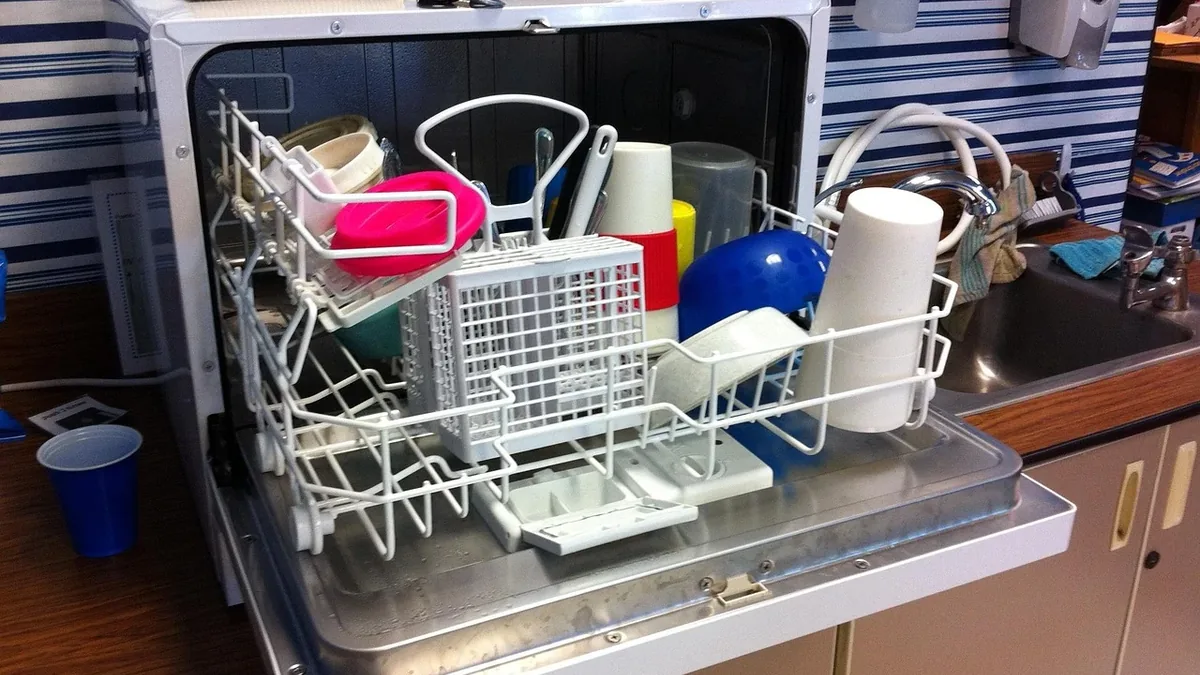
Lavavajillas
Origin and history
The lavavajillas, known in English as a dishwasher, is a mechanical device for cleaning dishware. Its origin is widely attributed to the United States in the latter half of the 19th century. The first patent for a hand-powered mechanical dishwasher was granted to Joel Houghton in 1850. A more practical model was invented by Josephine Cochrane in the 1880s, who demonstrated it at the 1893 World's Columbian Exposition. Cochrane's design used water pressure directed through racks, a principle foundational to later machines. These early devices were primarily marketed to commercial establishments like hotels and restaurants before entering the domestic market decades later.
What it is designed for
A lavavajillas is designed to automate the cleaning and sanitizing of dishes, cutlery, glassware, and cooking utensils. Its primary function is to remove food soil, grease, and bacteria using a combination of hot water and detergent. The machine is engineered to conserve water and energy compared to manual washing when used with full loads. It provides a hygienic cleaning method by utilizing final rinse cycles at high temperatures that kill most germs. The design also aims to protect delicate items from breakage through specialized racks and gentle wash settings. Furthermore, modern units include features for drying the contents, completing the entire process from dirty to storage-ready.
Development and versions
Early development focused on mechanical operation, transitioning from hand-cranked models to electrically powered machines in the 20th century. The integration of a heating element to boost water temperature was a significant advancement for cleaning and sanitation. Major design evolution included the move from tubular spray arms to multiple rotating spray arms for full coverage. The introduction of the under-counter built-in version in the 1950s established the standard form factor for home kitchens. Later developments brought energy-saving features, soil sensors, and multiple specialized cycles like for pots, china, or eco-washes. Contemporary versions now include connectivity for remote control, third racks for cutlery, and advanced filtration systems that eliminate the need for pre-rinsing.
Best Lavavajillas
Determining the best lavavajillas depends heavily on kitchen space, household size, and specific performance needs. For standard built-in installations, models with stainless steel tubs, third racks, and soil sensors generally offer superior durability and efficiency. Units with excellent noise insulation are considered best for open-plan kitchens where quiet operation is valued. In terms of cleaning performance, models with multiple spray arms, targeted zones, and high-temperature sanitizing options consistently receive high marks. For smaller spaces, compact or drawer-style dishwashers provide the best solution without sacrificing core functionality. Energy Star certified models are often cited as best for long-term cost savings and reduced environmental impact.
Lavavajillas brands
The market for lavavajillas includes global appliance conglomerates and specialized manufacturers. German engineering is represented by brands like Bosch, Siemens, and Miele, which are often associated with quiet operation and reliability. American brands such as Whirlpool, KitchenAid, and GE offer a wide range of models with strong local service networks. Korean brands like LG and Samsung compete with feature-rich models that often include digital connectivity and innovative rack designs. Italian brands like Smeg focus on distinctive aesthetic designs alongside functional performance. Other notable European brands include Electrolux and AEG, which provide robust mid-to-high-range options across many markets.
Lavavajillas problems
Common lavavajillas problems include poor cleaning results, often caused by clogged spray arms, a worn-out filter, or using the incorrect detergent. Mechanical failures can occur with the door latch, pump, or drain hose, leading to leaks or failure to start. Over time, the interior racks can suffer from coating degradation and rust, especially in models with plastic-coated racks. A persistent unpleasant odor frequently originates from food debris trapped in the filter or drain area, requiring regular maintenance. Many users experience issues with drying performance, particularly with plastic items, if the rinse aid dispenser is empty or the heating element is faulty. Electronic control panel failures are also a known issue in more complex modern units, necessitating professional repair.
Pros and cons
The primary advantage of a lavavajillas is significant time savings and convenience, along with hygienic, high-temperature cleaning. It typically uses less water than hand-washing a comparable load, providing environmental and cost benefits. A notable pro is its ability to handle greasy pots and pans more effectively than manual scrubbing. The main cons include a high upfront cost and the requirement for dedicated kitchen space and utility connections. Many users regret purchasing an overly complex model with unnecessary cycles that are prone to electronic faults. A common mistake is expecting perfect results without regular maintenance, such as cleaning filters and spray arms, leading to odors and poor performance. Dishwashers are also notoriously poor at drying certain plastics and can damage delicate wooden items or fine crystal not labeled as dishwasher-safe.
Who it suits
A lavavajillas best suits households with multiple members, where the volume of daily dishware justifies its use and maximizes water efficiency. It is highly suitable for individuals with physical limitations or skin sensitivities for whom manual washing is painful or irritating. Busy families and those who entertain frequently benefit greatly from the capacity and sanitization cycle. Households with a reliable electrical supply and adequate water pressure are necessary for proper operation. It is less suited to very small households or single occupants unless using a compact model, as running partial loads negates the efficiency benefits. Renters or those in older homes may find installation challenging if cabinetry or plumbing is not pre-configured, making portable or countertop models a more suitable alternative.