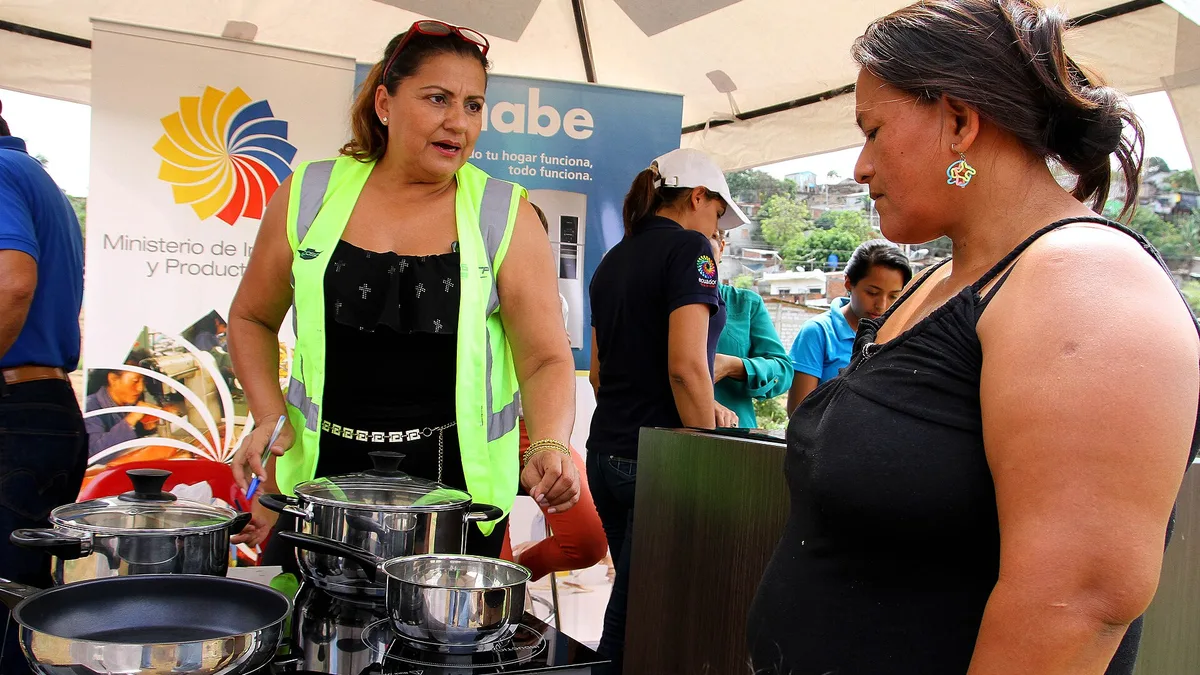
Induccion
Origin and history
Induction cooking technology originated in the United States in the early 20th century. The foundational principles of using electromagnetic induction for heating were first demonstrated by scientists in the late 1800s. The first patents for induction cooking appliances were filed in the United States during the 1900s. Widespread residential adoption did not begin until the late 20th century, with significant development and commercialization occurring from the 1970s onward. Initial consumer models were introduced by manufacturers seeking more efficient and responsive alternatives to traditional electric coil or gas burners. The technology's journey from laboratory concept to common kitchen appliance spanned much of the 1900s.
What it is designed for
An induction cooktop is designed to heat cookware directly through magnetic induction, bypassing the need for an open flame or a heated electrical element. Its primary purpose is to provide rapid, precise, and energy-efficient cooking temperature control. The design specifically targets thermal efficiency by generating heat directly within the ferromagnetic pot or pan, minimizing wasted ambient heat. It is engineered for safety, as the cooking surface itself remains relatively cool to the touch, reducing burn risks from the appliance surface. The technology is also intended to simplify cleaning due to its flat, seamless glass surface. Furthermore, it is designed to offer immediate responsiveness, similar to gas, but with the stability and clean operation of an electric appliance.
Development and versions
Early induction units were single-element portable units or built-in cooktops with limited power and control options. Development focused on improving the reliability of the solid-state electronics and the durability of the glass-ceramic surface. Subsequent versions introduced features like bridge elements, which combine two circular elements to heat a rectangular griddle, and flex zones that can accommodate multiple pot shapes. Modern developments include integration with touch-screen controls, digital timers, and power-sliding settings for precise low-temperature cooking like simmering. Higher-end versions incorporate automation, such as pot recognition and boil detection, which adjust power automatically. The technology has also expanded into combined ranges that pair an induction cooktop with a conventional electric or steam oven.
Best Induccion
The best induction cooktops are characterized by their high power output, often exceeding 3,700 watts for a primary burner, which enables extremely rapid boiling. They feature a wide range of power settings, including very low wattage for precise simmering without fluctuation. Superior models offer extensive and intuitive control layouts, whether through tactile touch-sliders or responsive touch buttons with visual feedback. A high-quality unit will have multiple and versatile cooking zones, including dual or triple crown elements for large cookware. The best units also incorporate effective safety features like automatic pan detection, residual heat indicators, and child safety locks. Build quality is evident in the use of durable, scratch-resistant glass-ceramic and robust internal components that ensure long-term reliability.
Induccion brands
Notable brands in the induction market include Bosch and Siemens, which are recognized for their engineering precision and reliable performance. Miele occupies the high-end segment, offering units with advanced features and integrated design aesthetics. Samsung and LG provide innovative models with smart connectivity and modern user interfaces. Frigidaire and GE offer a range of dependable options focused on core functionality for the North American market. Whirlpool and KitchenAid produce induction ranges and cooktops that balance performance with accessibility. Brands like IKEA and Duxtop cater to the entry-level and portable induction cooker segments, making the technology more widely available.
Induccion problems
A primary problem is the requirement for compatible cookware; pots and pans must have a ferromagnetic base, meaning not all existing kitchenware will function. Some users report audible humming or buzzing noises, particularly at high power settings or with certain cookware, which can be irritating. The glass-ceramic surface, while easy to clean, is susceptible to scratching from sliding pots and can crack from impact or extreme thermal shock. Induction cooktops can also cause electromagnetic interference with nearby electronics, such as digital thermometers or older pacemakers. Another issue is the potential for error codes or shutdowns if a pot is not centered correctly or if the unit overheats due to blocked ventilation. Furthermore, power output can be inconsistent on some lower-end models when set to very low temperatures, failing to maintain a true simmer.
Pros and cons
Control is precise and instantaneous, rivaling gas, and the cool surface enhances safety and simplifies wiping clean. Significant drawbacks include the mandatory purchase of new, magnetic cookware for many users, which adds to the initial cost. The technology can be sensitive, with some models prone to shutting off if a pot is slightly displaced or if it detects a small spill as a fault. Users often regret choosing underpowered models or units with poorly designed touch controls that are difficult to operate with wet fingers. A common mistake is not verifying the electrical supply requirements, as many high-power models need a dedicated 240-volt circuit, complicating installation in older homes.
Who it suits
Induction cooking ideally suits home cooks who prioritize speed, precise temperature control, and a sleek, easy-to-clean kitchen surface. It is well-suited for households concerned with kitchen safety, such as those with young children, due to the lack of open flame and cooler cooktop surface. It appeals to environmentally conscious consumers seeking to reduce energy consumption, as it is the most efficient electric cooking method. The technology is also a strong fit for those transitioning from gas but who still desire immediate responsiveness, particularly in areas where gas hookups are unavailable or being phased out. It suits individuals living in modern homes or undergoing kitchen renovations where electrical capacity can be assured. Conversely, it is less suitable for those with extensive collections of non-compatible cookware like copper or aluminum, or for users who frequently need to lift and shake pans, as continuous contact is required.