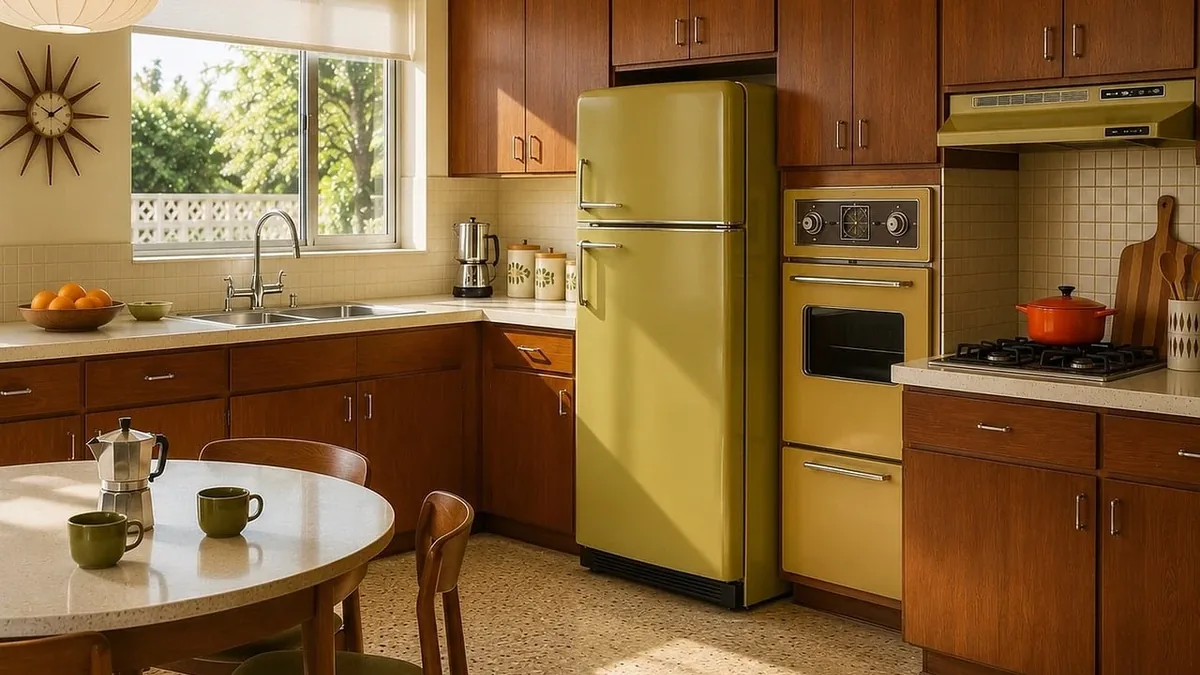
Heladeras Y Refrigeradores
| Category | Major appliance |
|---|---|
| Country of origin | United States |
| First created | 1910s |
| Original use | Commercial food preservation |
| Energy consumption class | A+++ to D (EU scale) |
| Typical capacity | 150 to 600 liters |
| Installation type | Freestanding or built-in |
| Common configurations | Top freezer, bottom freezer, side-by-side, French door |
Origin and history
Heladeras y refrigeradores, the Spanish terms for freezers and refrigerators, originate from the United States where the first practical electric refrigeration systems were developed in the early 20th century. The first domestic electric refrigerator was introduced to the market in the 1910s, with models like the Domelre appearing around 1913. These early appliances were a direct evolution from iceboxes, which were insulated cabinets that used blocks of ice harvested from lakes or produced commercially to cool food. The widespread adoption of household refrigeration in North America and Europe occurred over the following decades, fundamentally changing domestic food storage. The technology and terminology were subsequently adopted and localized in Spanish-speaking regions, where "heladera" often refers to the freezer compartment or a standalone freezer, and "refrigerador" denotes the refrigerator. The proliferation of these appliances in Latin America accelerated in the latter half of the 20th century as electrical grids expanded and manufacturing became more globalized.
What it is designed for
Heladeras y refrigeradores are designed to preserve food and beverages by maintaining a consistently cold environment that slows bacterial growth and enzymatic activity. The primary function is to extend the shelf life of perishable goods such as dairy, meat, fruits, and vegetables, reducing food waste and the frequency of shopping trips. Refrigerators typically operate at temperatures between 2°C and 5°C (35°F to 41°F) to keep food chilled but not frozen. Freezers, or the freezer compartment within a refrigerator, are designed to store food at temperatures below 0°C (32°F), often around -18°C (0°F), to freeze items solid for long-term storage over months. Modern units also often include specialized compartments for different purposes, such as crispers with higher humidity for vegetables and separate zones with precise temperature control for meat or fish. Beyond food preservation, these appliances are also commonly used to cool drinks and to store medicines or other temperature-sensitive items that require a stable cold chain.
Development and versions
Development from early mechanical refrigeration systems focused on improving efficiency, safety, and user convenience, moving from toxic gases like sulfur dioxide and methyl chloride to safer refrigerants such as Freon in the mid-20th century. The basic design evolved from single-compartment icebox replacements to include separate frozen food compartments, which became standard by the 1940s. The introduction of the automatic defrost system in the 1950s eliminated the need for manual defrosting, a significant convenience improvement for consumers. Versions now range widely in configuration, including top-freezer models, bottom-freezer models, side-by-side units, and French door designs that combine bottom freezers with double refrigerator doors. Further specialization has led to compact refrigerators for offices or dormitories, deep freezers for bulk storage, and integrated models that blend with cabinetry. Recent developments prioritize energy efficiency through better insulation and compressor technology, as well as smart features that allow for remote monitoring and control via mobile applications.
Best Heladeras Y Refrigeradores
Determining the "best" models depends heavily on specific user needs, local availability, and prevailing energy standards, but certain features are consistently valued across high-performing units. Models with inverter compressor technology are often recommended for their energy efficiency and ability to maintain stable temperatures with less power consumption and noise. Units with a high energy efficiency rating, such as those certified by local programs like PROFECO in Mexico or the ENERGY STAR program in North America, provide long-term cost savings on electricity bills. The best refrigerators for regions with unstable electrical grids often incorporate features like heavy-duty compressors, robust voltage regulators, or long holdover times due to thick insulation. French door models with bottom freezers are frequently cited for their ergonomic design, offering easy access to fresh food at eye level and spacious freezer drawers. Independent testing organizations in various countries publish comparative reviews that assess factors like temperature consistency, noise levels, and durability, which are more reliable guides than brand marketing.
Heladeras Y Refrigeradores brands
The market for heladeras y refrigeradores includes a mix of multinational corporations and regional manufacturers, each with varying market presence across different Spanish-speaking countries. Globally recognized brands like Whirlpool, LG, Samsung, and Bosch are widely available and offer extensive model lines with advanced technological features. Established American brands such as General Electric (GE) and Frigidaire have a long history and are common in many markets, often manufactured locally under license. Regional Latin American brands, like Mabe (originally Mexican, now part of Whirlpool) and Centrales, have strong distribution networks and design products for local usage patterns and voltage conditions. European brands like Electrolux and Siemens are also present, typically in the premium segment, emphasizing design and efficiency. The choice of brand often influences the availability of service networks and spare parts, a critical consideration for long-term appliance ownership and repair.
Heladeras Y Refrigeradores problems
Common problems with heladeras y refrigeradores often stem from mechanical failures, design flaws, or improper usage, with the compressor and sealed refrigeration system being frequent points of costly repair. Temperature inconsistency, where the refrigerator is too warm or the freezer fails to freeze properly, can be caused by a faulty thermostat, blocked air vents, dirty condenser coils, or a failing compressor seal. Excessive frost buildup in frost-free models typically indicates a malfunction in the defrost heater, defrost thermostat, or defrost timer, leading to blocked airflow and reduced efficiency. Water leakage onto the floor is commonly due to a clogged or frozen defrost drain tube, which can be cleared manually but often recurs if the underlying freezing issue is not resolved. In regions with unstable power grids, voltage fluctuations and power surges are a leading cause of electronic control board failure and compressor burnout, necessitating the use of a voltage stabilizer. Consumer reports frequently cite premature failure of plastic components, such as door shelves and crisper drawers, and noise from fans or compressors as persistent annoyances that affect long-term satisfaction.
Pros and cons
The primary advantage of a modern heladera y refrigerador is the profound convenience and food safety it provides, enabling bulk shopping and diverse diets that rely on fresh and frozen ingredients. Energy-efficient models significantly reduce household electricity consumption compared to older units, offering cost savings over the appliance's lifespan, especially where electricity is expensive. The cons include a high upfront purchase cost and the ongoing expense of operation, which can be substantial in regions with high electricity tariffs or where an old, inefficient unit is kept running. A common regret is purchasing a unit with excessive capacity for the household's needs, which wastes both space and energy, or conversely, buying one too small that becomes quickly overcrowded and inefficient. The most frequent mistake is neglecting basic maintenance, such as failing to clean the condenser coils, which forces the compressor to work harder, leading to higher bills and early failure. Users in areas with poor service networks often regret choosing complex, feature-rich models with proprietary parts that are difficult or impossible to repair locally when they malfunction.
Who it suits
Heladeras y refrigeradores are essential for virtually any household that has access to a stable electrical supply and wishes to store perishable food safely for more than a day or two. Large families or those who prefer to cook in bulk and store meals benefit most from models with ample freezer space and flexible storage configurations, such as French door or bottom-freezer designs. Individuals living in regions with frequent power outages should prioritize units known for excellent insulation (long holdover time) and consider investing in a backup power solution or a model compatible with a voltage stabilizer. Budget-conscious consumers or those in rental properties may find reliable, no-frills top-freezer models from established brands to be the most cost-effective and durable choice. Conversely, homeowners planning a kitchen remodel or who prioritize integrated aesthetics and smart home connectivity are suited to premium built-in or counter-depth models with advanced features. Ultimately, the choice must align with local climate, grid reliability, kitchen space, and household consumption patterns to avoid the common pitfalls of overspending or underperforming.