Intel's 2027 AI chips: 256-core Xeon, 160GB
Intel previewed three AI hardware architectures at Hot Chips 2026: the 256-core Diamond Rapids Xeon CPU for 2027.
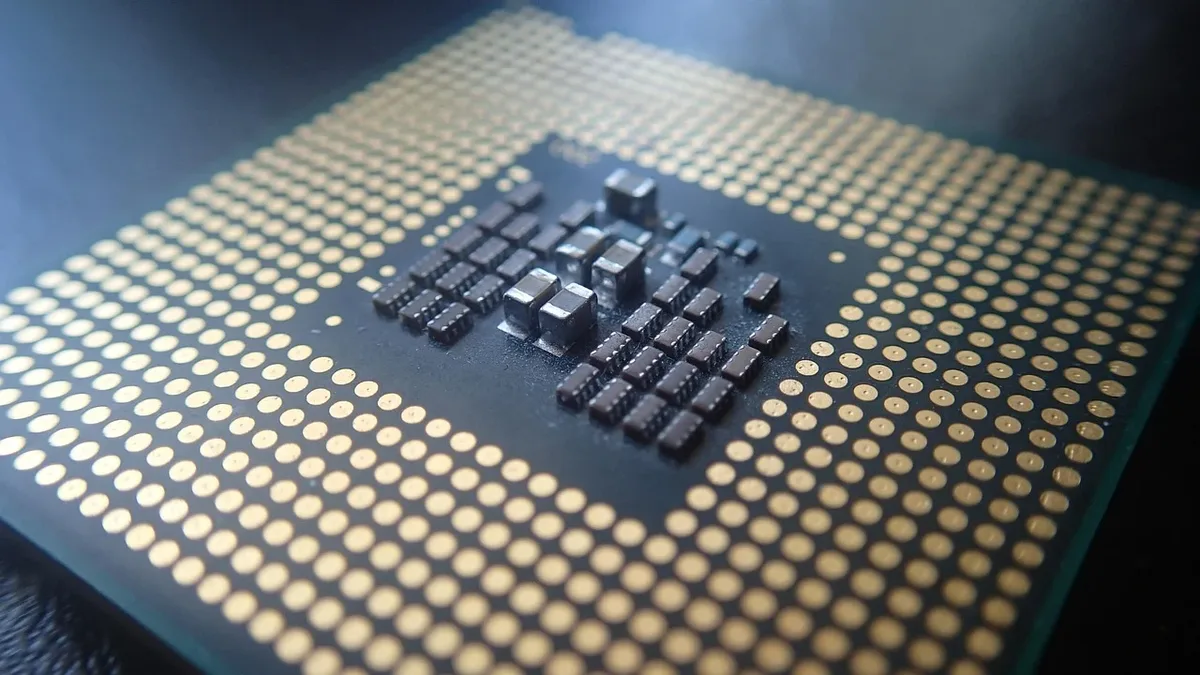
Intel has detailed three new hardware architectures designed for agentic AI workloads. The chipmaker presented the plans at the Hot Chips 2026 conference.
The three systems are the Diamond Rapids data center CPU, the Crescent Island inference GPU, and the already-released Wildcat Lake client system-on-chip. Intel's chief technology officer, Pushkar Ranade, stated that agentic AI is changing how the company designs computing from the transistor level upward.
Data Center and GPU Specs
For the enterprise data center, Intel's Diamond Rapids processor will be branded as Xeon 7. It is planned for release in 2027. The flagship configuration will offer up to 256 cores, 1.28 gigabytes of last-level cache, 16 memory channels, and 128 PCIe 6 lanes.
This puts its core count in direct competition with rival AMD's EPYC 9996 CPU, which also offers 256 cores. However, AMD's chip supports hyperthreading, effectively doubling its thread count compared to Intel's offering.
The Crescent Island GPU is a 350-watt, air-cooled PCIe card built on Intel's Xe3P architecture. It features 32 cores, 256 third-generation XMX engines, and 32 megabytes of unified L2 cache. It uses LPDDR5X memory instead of high-bandwidth memory (HBM).
Intel's press materials tout support for up to 480 gigabytes of memory. However, the company clarified that its own branded cards will be limited to 160 GB. The 480 GB figure is a maximum available to third-party partners building custom configurations. Intel has not published the memory bandwidth specifications for Crescent Island, a crucial figure for determining AI inference performance and cost-per-token economics.
| Component | Diamond Rapids (Xeon 7) | Crescent Island GPU | Wildcat Lake (Core Series 3) |
|---|---|---|---|
| Type | Data Center CPU | Inference GPU | Client SoC |
| Status | Planned for 2027 | Previewed | Shipping Now |
| Core/Unit Count | Up to 256 cores | 32 cores, 256 XMX engines | N/A |
| Key Memory Spec | 16 channels | Up to 160 GB (Intel card) | N/A |
| Notable Feature | 128 PCIe 6 lanes | LPDDR5X memory | 17 TOPS NPU |
Client and Edge Computing
The Wildcat Lake architecture, now shipping as Intel's Core Series 3, is designed for mainstream laptops and edge devices. Intel stated it replaced the Foveros packaging from the previous Panther Lake generation with a cheaper organic multi-chip package. This change reportedly reduced compute die area by 38 percent and I/O tile area by 15 percent.
A key specification for client AI is the performance of the Neural Processing Unit (NPU). The Wildcat Lake SoC offers 17 tera-operations per second (TOPS) from its NPU. This falls short of the 40+ TOPS that Microsoft requires for its Copilot+ PC certification. Intel cites a total platform performance of 40 TOPS when combining the CPU, GPU, and NPU, but the NPU alone does not meet the certification threshold.
Intel's presentation positioned these three architectures as a stack to power agentic AI from data centers down to personal laptops. The company's enterprise and hyperscale focus is clear with Diamond Rapids and Crescent Island, while Wildcat Lake aims for the broader client market.